
 pin it
The first cheesecake I ever baked split straight down the middle like a dry riverbed, and I spent an hour trying to hide the crack under a mountain of berries. That accident taught me two things: that blueberries forgive almost anything, and that a cheesecake is really just a custard that happens to be wearing a crust. I have baked this one most Julys since, usually the weekend my neighbour's bushes start dropping fruit faster than anyone can eat it.
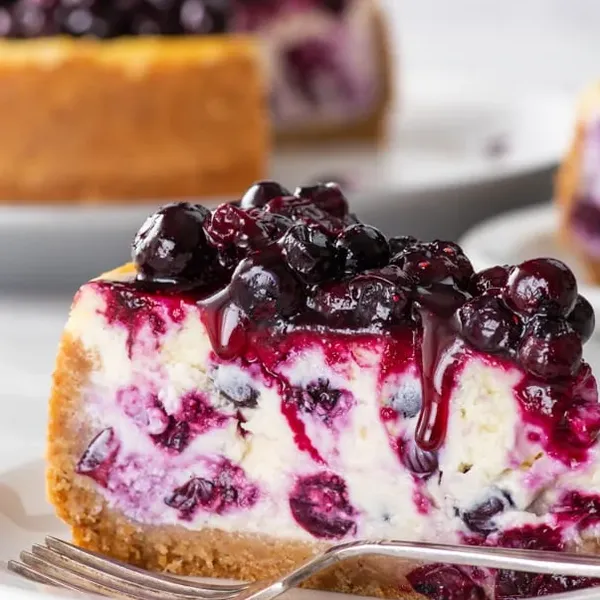
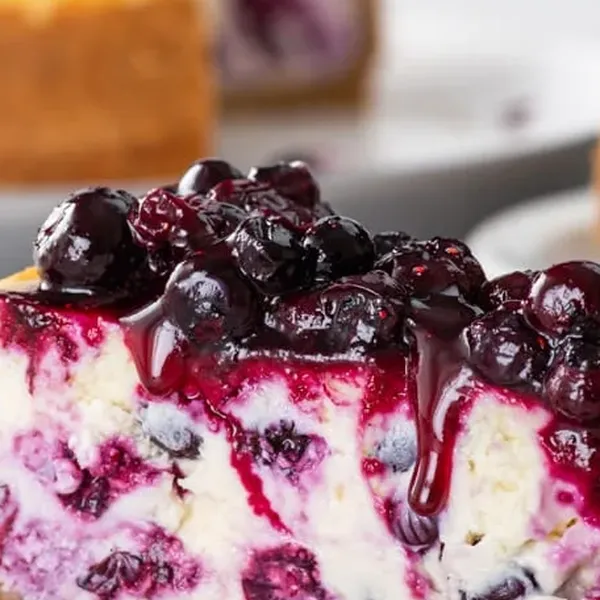
What makes this version mine is that the berries go in twice. A cup and a half gets tossed in cornstarch and folded through the batter, so every slice is marbled with purple where the fruit burst against the cream cheese, and the rest simmers down into a glossy compote that gets spooned over the top only once the cake is cold. Lemon zest in the filling keeps all that sweetness from turning flat.
Expect a dense, silky, properly baked cheesecake, not a no-bake one. It needs a water bath, a slow cool and a long chill, so start it the day before you plan to serve it. The active work is maybe forty minutes with a mixer; everything after that is patience. What you get back is twelve clean slices, a buttery graham base that stays crisp underneath, and a top that tastes faintly of jam.
Why I love this recipe
It is the texture, first of all. Full-fat cream cheese and a spoonful of cornstarch give you a filling that slices cleanly with a warm knife and still melts on the tongue, somewhere between baked custard and cold buttercream. The berries folded through stay whole enough to pop, so you get a bright, slightly tart burst against all that richness every few bites. The crust stays crisp underneath because it is pre-baked and cooled completely before any batter touches it.
It is also a genuinely economical dessert for the number of people it feeds. Four blocks of cream cheese and a box of graham crackers will serve twelve with generous slices, which works out cheaper per head than most bakery cakes and tastes considerably better. It keeps beautifully: five days covered in the fridge, and the flavour is arguably better on day two once the lemon has settled in. It freezes for three months, sliced and wrapped, so you can pull out one piece at a time. And it pleases everyone, because children go straight for the compote, adults go quiet for the first three bites, and anyone who claims not to like dessert usually asks for a thin second slice. The only thing it asks of you is planning, because it has to be properly cold to be good.
What You Need From Your Kitchen
- Full-fat cream cheese: Blocks only, never the tub spread; the water in whipped versions ruins the set.
- Graham cracker crumbs: Pressed with melted butter and pre-baked so the base stays crisp under the filling.
- Full-fat sour cream: Adds tang and keeps the crumb silky; low-fat versions split in the oven.
- Cornstarch: Two jobs: stabilises the filling against cracks and thickens the compote to a glossy sauce.
- Eggs: Room temperature and beaten in one at a time, just until each disappears.
- Fresh blueberries: Half go into the batter in cornstarch, half simmer down into the topping.
- Lemon zest and juice: Cuts the richness and stops all that sugar and dairy tasting one-note.
- Unsalted butter: Melted for the crust; unsalted lets you control the salt in the base.
Let's Make These Together
- Build and blind-bake the base
- Pulse the graham crackers to fine crumbs, stir in the sugar, salt and melted butter, and press the mixture firmly up the sides and across the base of your springform. A flat-bottomed glass gives you the tidiest edge. Bake at 350F for ten minutes, until it smells toasty and looks a shade darker, then cool it completely before anything else goes in.
- Beat the filling slowly
- Beat the room-temperature cream cheese with the sugar and cornstarch on low until there is not a single lump left, scraping the bowl twice. Low speed matters here: air beaten in now becomes cracks later. Add the sour cream, vanilla, lemon zest and juice, then the eggs one at a time, mixing only until each disappears into a smooth, pourable batter.
- Fold in the blueberries
- Toss the blueberries with a tablespoon of cornstarch so they hold their place instead of sinking, then fold them through with a spatula in about six strokes. You want streaks, not a uniform purple batter. Pour everything over the cooled crust and rap the pan gently on the counter a few times until the surface smooths out and the bubbles rise.
- Bake in a water bath
- Wrap the pan in heavy foil, set it in a roasting tin and pour in boiling water to come halfway up. Bake at 325F for about seventy minutes. It is ready when the outer two inches look set and matte and the centre three inches still wobble like loose jelly when you nudge the tin.
- Cool slowly, then chill
- Turn the oven off, crack the door open with a wooden spoon and leave the cake there for an hour. Then lift it out, run a thin knife around the rim to free the edge, and let it come to room temperature before covering and refrigerating for at least six hours. Overnight is better; the texture firms into something sliceable and dense.
- Make the compote and top
- Simmer the blueberries with sugar, lemon juice and a pinch of salt for five minutes, until half of them have burst and the pan smells like jam. Stir in the cornstarch slurry and cook one minute more, until it coats the back of a spoon in a glossy sheet. Cool completely, then spoon it over the cold cheesecake just before serving.
 pin it
Switch Things Up
Frozen blueberries work in both places, with one caveat: do not thaw them first. Toss them straight from the freezer in cornstarch for the filling, and add three or four extra minutes to the compote to cook off the extra liquid. Blackberries or a mix of summer berries behave almost identically, though raspberries collapse entirely and turn the batter pink.
The crust is open to interpretation. Digestive biscuits, shortbread or gingersnaps all make excellent bases, and gingersnaps in particular are wonderful against the lemon. For a gluten-free cake, use gluten-free graham-style crumbs and check your cornstarch. I have also swapped a third of the cream cheese for full-fat ricotta, pressed through a sieve, which gives a lighter, slightly grainier crumb that some people prefer. A tablespoon of bourbon in the compote is a good grown-up addition, and half a teaspoon of almond extract in the filling makes it taste faintly of bakewell tart. If you like a tangier cake, replace the sour cream with the same weight of thick Greek yogurt and add an extra teaspoon of lemon zest.
Perfect Pairings
Coffee is the obvious partner and the right one, because a strong, slightly bitter filter or an espresso cuts straight through the fat and resets your palate between forkfuls. If you are serving this after dinner, a small glass of chilled Moscato d'Asti or a late-harvest Riesling picks up the berries without fighting them, and a good Earl Grey does the same job for anyone not drinking. On the plate, less is more: a spoonful of barely sweetened whipped cream, a few fresh blueberries scattered alongside, maybe a mint leaf if you are feeling formal. I would not serve ice cream with it, because two cold creamy things on one plate cancel each other out. A little more lemon zest grated over at the table is free and worth doing.
 pin it
Frequently Asked Questions
- → Why did my cheesecake crack down the middle?
Almost always because of air or temperature. Beating on high whips bubbles into the batter that expand and tear the surface, and cooling too fast makes the cake contract against the pan walls. Beat low, bake in a water bath, and run a knife around the rim as soon as it leaves the oven.
- → Can I skip the water bath?
You can, but you will be trading texture for convenience. Without steam the edges bake faster than the centre and set firm and slightly dry. If you must, place a roasting tin of boiling water on the shelf below, drop the oven to 315F, and expect an extra ten minutes.
- → Can I use frozen blueberries?
Yes, in both the filling and the topping, and they are often better value out of season. Use them frozen, never thawed, and toss the filling berries in cornstarch while they are still icy. The compote will need a few extra minutes on the heat to drive off the additional water.
- → How far ahead can I make it?
Bake it up to three days before you need it and keep it loosely covered in the fridge. The compote keeps a week in a jar. I would not top the cake until the day you serve it, because the syrup slowly bleeds into the surface and softens it.
- → Do the ingredients really need to be at room temperature?
Cold cream cheese never fully smooths out, and the lumps you leave behind at the mixing stage are still there after baking. Cold eggs seize the batter and cause you to overbeat compensating for it. Leave everything on the counter for two hours, or an hour if your kitchen is warm.
- → How do I get clean slices?
Use a long thin blade, dip it in a jug of very hot water, wipe it dry, then cut in one downward push rather than sawing. Repeat the dip and wipe between every single slice. It feels fussy for about four cuts, and then you will never do it any other way.
Conclusion
This is a weekend cake in the best sense: an hour of work on Saturday, a night in the fridge, and something on Sunday that looks like it came from a pastry case. Do not rush the chill, do not skip the water bath, and do not be afraid of that wobble in the middle when you pull it out of the oven. Everything else is forgiving. Make it once with the compote as written, then start playing with whatever fruit your summer hands you. I would love to hear how it turns out.