
 pin it
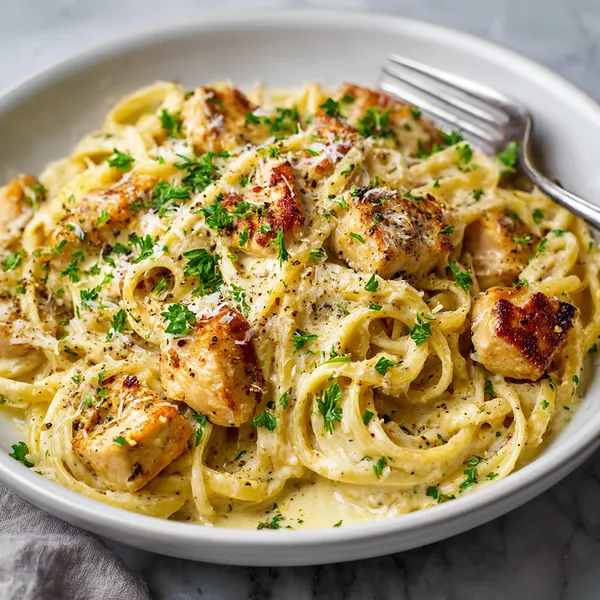
I first encountered real carbonara during a college semester abroad in Rome, and it completely changed my understanding of pasta. But let me be honest – I'm a protein person, and traditional carbonara, while delicious, left me wanting more substance. That's when I started experimenting with adding chicken, and this recipe was born from countless kitchen experiments. This Chicken Carbonara takes the authentic Roman technique – using egg yolks and Parmesan to create that signature silky sauce – and elevates it with perfectly seasoned, golden-brown chicken pieces. The bacon isn't just a garnish; it's integral to the flavor profile, adding that essential smoky, salty punch. What makes this special is the technique: you're not making a cream sauce, you're creating an emulsion using the residual heat from the pasta and reserved pasta water. The result is a sauce that's lighter than cream-based versions but infinitely more flavorful. Each strand of fettuccine gets coated in this glossy, egg-enriched sauce, while the chicken adds heartiness and the bacon provides textural contrast. It's comfort food that doesn't feel heavy, sophisticated enough for date night but easy enough for a weeknight dinner.
Why I love this recipe
This recipe holds a special place in my heart because it represents the perfect marriage of technique and flexibility. I love how it teaches you a fundamental Italian cooking method – creating carbonara sauce – while allowing you to make it your own by adding chicken. There's something deeply satisfying about the simplicity of the ingredients list: eggs, cheese, bacon, chicken, pasta. No cream, no complicated steps, yet the result is restaurant-worthy every single time. I love the moment when you toss the hot pasta with the egg mixture and watch it transform into liquid gold, coating every piece perfectly. The crispy bacon bits add surprise pockets of flavor, and the chicken makes it substantial enough that it's truly a complete meal. I also appreciate that this dish comes together in under 45 minutes, yet tastes like you spent hours in the kitchen. It's become my signature dish for impressing guests, and I've watched countless friends' faces light up at that first bite. Most importantly, this recipe taught me that respecting traditional techniques while adding your own twist isn't disrespectful – it's how food evolves and how we make recipes our own.
What You Need From Your Kitchen
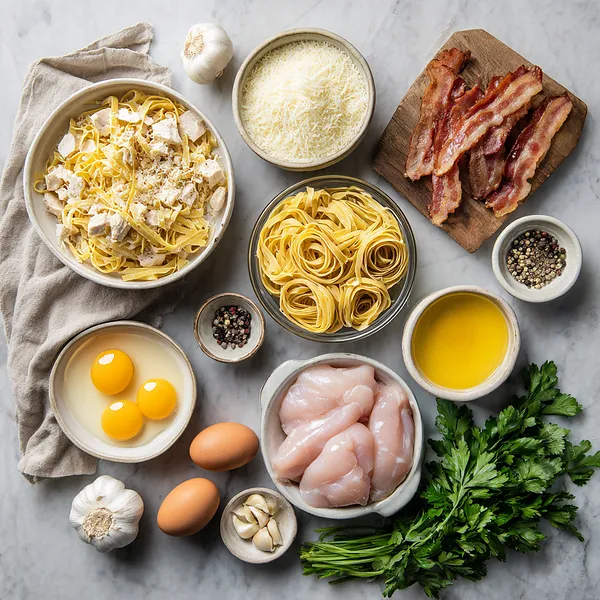
- Fettuccine pasta: Cook in salted boiling water until al dente, reserving pasta water before draining
- Chicken breasts: Cut into bite-sized pieces and season with salt and pepper before cooking
- Bacon: Chop into small pieces and cook until crispy, then set aside
- Egg yolks: Separate from whites and whisk with Parmesan to create the carbonara sauce base
- Parmesan cheese: Grate freshly and mix with egg yolks, plus reserve extra for garnish
- Garlic: Mince finely and sauté with chicken during the last minute of cooking
- Fresh parsley: Chop and use as garnish for color and freshness
Let's Make These Together
- Boil and Prepare Pasta
- Start by bringing a large pot of generously salted water to a rolling boil. Add your fettuccine and cook according to package directions, stirring occasionally to prevent sticking. The pasta should be al dente – tender but still with a slight bite. Before draining, use a measuring cup to scoop out at least 2 cups of that starchy pasta water. This liquid gold will be crucial for creating your silky carbonara sauce later.
- Crisp the Bacon
- While your pasta cooks, place a large skillet over medium heat and add your chopped bacon. Let it sizzle and render its fat, stirring occasionally to ensure even cooking. You want the bacon pieces to become golden brown and crispy, which usually takes about 5-7 minutes. Once perfectly crisp, use a slotted spoon to transfer the bacon to a paper towel-lined plate, but leave about a tablespoon of that flavorful bacon fat in the pan.
- Sear the Chicken
- Season your chicken pieces generously with salt and freshly ground black pepper. Add a tablespoon of olive oil to the bacon fat remaining in your skillet and turn the heat up to medium-high. Add the chicken pieces in a single layer, letting them develop a beautiful golden-brown crust. Cook for about 6-8 minutes, flipping halfway through, until the chicken is cooked through and no longer pink inside. Add your minced garlic during the last minute of cooking, stirring constantly so it becomes fragrant but doesn't burn. Remove the skillet from heat.
- Create the Magical Sauce
- In a medium bowl, whisk together your egg yolks and freshly grated Parmesan cheese until they're well combined and the mixture is smooth. Add a generous amount of freshly cracked black pepper. This egg-cheese mixture is the heart of your carbonara, so make sure it's thoroughly mixed.
- Bring It All Together
- Here's where the magic happens. Add your hot, drained pasta directly to the skillet with the chicken. Working quickly and confidently, pour the egg and Parmesan mixture over the pasta while tossing everything together continuously with tongs. The residual heat from the pasta will gently cook the eggs, creating a creamy, glossy sauce. Start adding your reserved pasta water, a few tablespoons at a time, while continuing to toss. Keep adding water and tossing until the sauce reaches a silky, creamy consistency that coats every strand of pasta. Add the crispy bacon back in and toss one final time. Serve immediately, topped with fresh parsley and extra Parmesan.
 pin it
Switch Things Up
I'll never forget the first time I successfully made carbonara without scrambling the eggs – it felt like I'd unlocked a culinary superpower! I had attempted this dish three times before, each ending with clumpy, scrambled disasters. Then one rainy Tuesday evening, I decided to really focus on the technique: tempering those egg yolks slowly, using pasta water to create that silky emulsion. When I added the chicken and bacon to make it more substantial, my roommate walked into the kitchen and literally stopped mid-sentence. The aroma was intoxicating – garlic, smoky bacon, toasted Parmesan. We ate straight from the pan with two forks, standing at the counter, too impatient to even plate it properly. That's when I realized carbonara wasn't just a recipe; it was a technique worth mastering. Now it's my go-to dish when I want to feel like a real chef, and adding the chicken makes it hearty enough that nobody leaves the table hungry.
Perfect Pairings
This Chicken Carbonara pairs beautifully with a crisp Caesar salad dressed with lemon and anchovy – the acidity cuts through the richness perfectly. A side of roasted asparagus or broccolini adds a fresh, slightly bitter contrast that balances the creamy sauce. For bread, try garlic knots or a crusty Italian loaf to soak up every drop of that luscious sauce. Wine-wise, a crisp white like Pinot Grigio or a light-bodied Chardonnay complements the dish without overwhelming it. If you're feeling indulgent, start with bruschetta topped with fresh tomatoes and basil to awaken your palate before diving into this rich main course.
 pin it
Frequently Asked Questions
- → Can I use bacon substitutes in this recipe?
Yes, you can use pancetta for a more traditional Italian flavor, or turkey bacon for a lighter option. You can even use prosciutto for a more delicate taste. Just adjust cooking times as needed since different meats have different fat contents.
- → Why does my carbonara sauce always turn out scrambled?
This happens when the pasta or pan is too hot when you add the egg mixture. The key is to remove the skillet from heat before adding the eggs, and to toss constantly while adding the egg mixture. The residual heat from the pasta is enough to cook the eggs gently. If you're nervous, let the pasta cool for 30 seconds before proceeding.
- → Can I make this recipe ahead of time?
Carbonara is best enjoyed immediately after making it, as the sauce can separate or become gummy when reheated. However, you can prep ingredients in advance – cook and chop the bacon, cut the chicken, and grate the cheese. Then cook the pasta and assemble everything fresh when ready to serve.
- → What type of pasta works best for carbonara?
While fettuccine works beautifully, traditional carbonara uses spaghetti or rigatoni. Long pasta like linguine or bucatini also work well. The key is choosing a pasta shape that will hold the sauce – avoid delicate shapes like angel hair.
- → Can I add vegetables to this dish?
Absolutely! Peas are a classic addition that adds sweetness and color. You can also add sautéed mushrooms, roasted cherry tomatoes, or blanched broccoli. Just be mindful not to add too many vegetables, as you don't want to overwhelm the delicate carbonara sauce.
- → How do I store and reheat leftovers?
Store leftovers in an airtight container in the refrigerator for up to 2 days. Reheat gently in a skillet over low heat, adding a splash of milk or pasta water to help reconstitute the sauce. Avoid microwaving if possible, as it can make the eggs rubbery. The texture won't be quite as perfect as fresh, but it will still be delicious.
Conclusion
This Chicken Carbonara brings together the best of Italian tradition with a hearty protein twist that makes it a complete meal. The combination of silky egg-based sauce, crispy bacon, and tender chicken creates layers of flavor and texture that satisfy every craving. It's proof that restaurant-quality dishes can be mastered at home with the right technique. Whether you're cooking for family dinner or impressing guests, this carbonara delivers every single time. The beauty lies in its simplicity – quality ingredients combined with proper technique create magic on a plate.