
 pin it
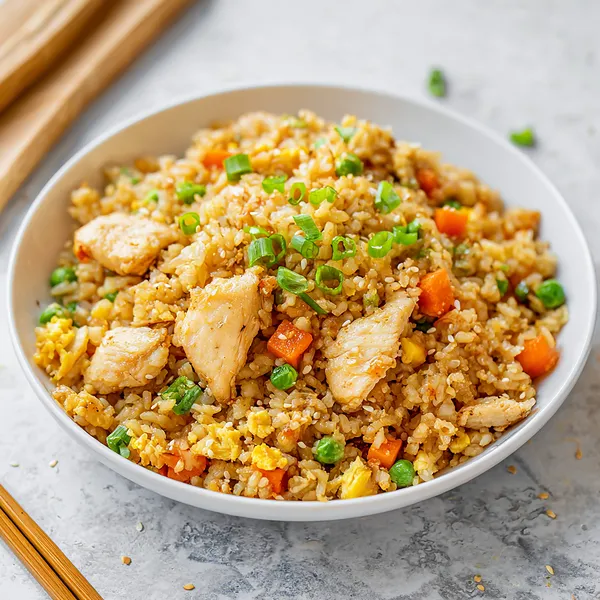
I first discovered the magic of homemade fried rice during college when I was desperately trying to stretch my grocery budget while still eating well. A friend from Hong Kong showed me how her grandmother made fried rice, and it completely changed my perspective on this dish. I learned that the secret isn't just about tossing rice in a pan – it's about technique, timing, and using the right ingredients. This recipe represents everything I've learned over the years about making perfect fried rice. The chicken adds substantial protein, while the eggs create these beautiful golden ribbons throughout the rice. The vegetables provide color, texture, and nutrition. What makes this recipe special is the balance of flavors – the soy sauce and oyster sauce create a savory umami base, while the sesame oil adds that distinctive nutty aroma. The garlic and ginger bring warmth and depth. Every time I make this, I'm reminded of how such simple ingredients can transform into something so incredibly satisfying. It's become my go-to recipe when I want comfort food that's actually nutritious and doesn't leave me feeling heavy.
Why I love this recipe
I absolutely love this recipe because it embodies everything a great home-cooked meal should be – it's quick, economical, versatile, and incredibly delicious. There's something deeply satisfying about taking leftover rice and transforming it into something that tastes better than restaurant takeout. I love how adaptable this recipe is; I've made it with different proteins, various vegetables, and even experimented with different sauces, and it always turns out amazing. The high-heat cooking method creates that distinctive wok flavor that makes fried rice so addictive. I also appreciate how this recipe helps reduce food waste – it's perfect for using up leftover rice, odd vegetables in the fridge, or that piece of chicken you need to cook before it goes bad. Beyond the practical aspects, this dish brings back wonderful memories of family dinners, late-night cooking sessions with friends, and those moments when I surprised myself with how restaurant-quality my home cooking could be. It's a recipe that makes me feel accomplished every single time, and the smiles on my family's faces when I serve it never get old.
What You Need From Your Kitchen
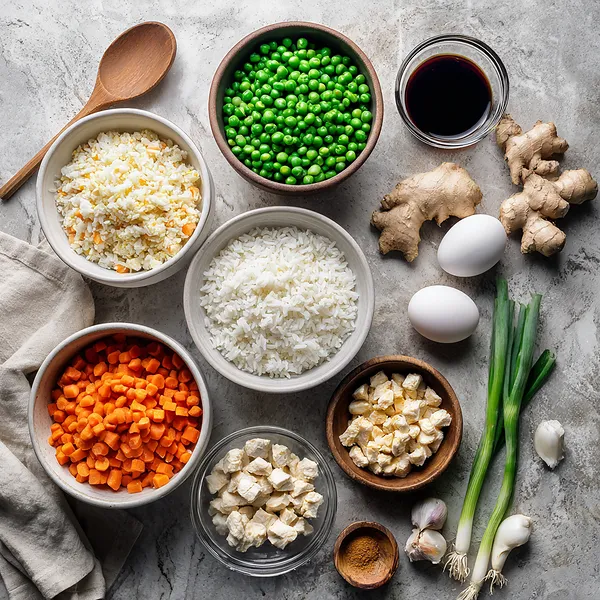
- Cooked White Rice: Use day-old refrigerated rice that's been broken into individual grains
- Chicken Breasts: Dice into uniform bite-sized pieces and pat dry before cooking
- Eggs: Beat lightly with a pinch of salt before scrambling
- Peas and Carrots: Can use frozen directly from the freezer, no need to thaw
- Garlic and Ginger: Mince garlic finely and grate ginger on a microplane for maximum flavor
- Soy Sauce and Oyster Sauce: These provide the essential umami and savory flavor base
- Green Onions: Slice thinly, separating white and green parts for different cooking times
Let's Make These Together
- Prep Your Mise en Place
- The French culinary term "mise en place" means "everything in its place," and it's crucial for fried rice success. Since the cooking happens quickly over high heat, you need all ingredients prepped, measured, and within arm's reach before you start. Break up your cold rice, dice your chicken uniformly, mince your aromatics, measure your sauces, and crack your eggs. This preparation ensures smooth cooking without any scrambling to find ingredients mid-recipe. Trust me, trying to mince garlic while your chicken is burning in the wok is no fun – I've learned this lesson the hard way!
- Master the High-Heat Technique
- The secret to restaurant-quality fried rice at home is cooking everything over high heat. Your wok or skillet should be smoking hot before you add any ingredients. This high temperature creates that characteristic "wok hei" or breath of the wok – a slightly smoky, charred flavor that makes fried rice so addictive. When you add ingredients, you should hear an immediate sizzle. Work quickly, keep everything moving with your spatula, and don't be afraid of a little char here and there. That's exactly what you want! The high heat also evaporates excess moisture quickly, preventing soggy rice.
- Use Day-Old Cold Rice
- This is perhaps the most important tip for perfect fried rice. Freshly cooked rice contains too much moisture and will turn into a sticky, mushy mess when you try to fry it. Day-old rice that's been refrigerated becomes slightly dried out, and the grains firm up and separate. When it hits the hot wok, each grain can get coated in oil and sauce individually, creating that perfect texture. If you're planning to make fried rice, cook your rice the day before, spread it on a baking sheet, and refrigerate it uncovered. If you forget to do this, spread fresh rice on a baking sheet and refrigerate for at least an hour before using.
- Layer Your Flavors Properly
- Great fried rice isn't just about tossing everything together – it's about building layers of flavor. Start by cooking your protein until it develops a golden crust, which adds depth. Then scramble your eggs separately so they stay fluffy. Stir-fry your aromatics until fragrant, releasing their essential oils. Add vegetables and cook until just tender. Finally, combine everything with the rice and sauces. Each component gets its moment to shine and develop maximum flavor before coming together in that final, glorious combination. This is why fried rice tastes so much better than it seems like it should – it's all about those carefully developed layers.
- Don't Overdo the Sauce
- A common mistake when making fried rice at home is adding too much sauce, which makes the rice soggy and dark. The goal is lightly seasoned, golden-brown rice, not wet, overly salty rice. Start with the amount of soy sauce and oyster sauce listed in the recipe, then taste and adjust. Remember, you can always add more, but you can't take it away. The sesame oil should be used sparingly as a finishing touch for aroma, not as a cooking oil. When in doubt, err on the side of less sauce – your fried rice should look golden and slightly dry, with each grain distinct and separate.
 pin it
Switch Things Up
I'll never forget the first time I made this fried rice on a random Tuesday night when I had absolutely nothing planned for dinner. I opened my fridge and spotted leftover rice from the night before, some chicken breasts that needed to be used, and a bag of frozen peas and carrots in the freezer. Thirty minutes later, I had this incredible meal that tasted better than anything I'd ordered from my local Chinese restaurant. My family couldn't believe I'd made it from scratch! Now, this recipe has become my secret weapon for those nights when I need something quick, satisfying, and delicious. I've made it dozens of times, sometimes adding extra vegetables, other times tossing in some pineapple for a sweet twist. What I love most is how the rice gets that perfect texture – not mushy, not dry, just absolutely perfect. The smell of garlic and ginger sizzling in the wok instantly transports me to my favorite Asian restaurant, except I'm creating that magic in my own kitchen.
Perfect Pairings
This Chicken Fried Rice pairs beautifully with a variety of Asian-inspired dishes or can stand alone as a complete meal. For a fuller spread, serve it alongside some crispy egg rolls or spring rolls with sweet chili sauce for dipping. A light cucumber salad with rice vinegar dressing provides a refreshing contrast to the savory rice. If you want to add more protein, consider pairing it with grilled teriyaki salmon or sweet and sour shrimp. For drinks, green tea, jasmine tea, or a cold Asian beer complement the flavors perfectly. You could also serve it with a simple miso soup or hot and sour soup as a starter. For a complete Asian feast, add some steamed dumplings or potstickers on the side.
 pin it
Frequently Asked Questions
- → Can I use brown rice instead of white rice?
Yes, you can definitely use brown rice, but keep in mind it has a chewier texture and nuttier flavor. Brown rice also takes longer to cook initially, so make sure it's fully cooked and cold before using it for fried rice. The same day-old rule applies – refrigerate your cooked brown rice overnight for best results. You may need to add an extra minute or two of stir-frying time since brown rice is denser than white rice.
- → What if I don't have day-old rice?
If you don't have day-old rice, you can make fresh rice work with a simple trick. Cook your rice with slightly less water than usual so it comes out a bit drier. Once cooked, spread it in a thin layer on a baking sheet and place it in the refrigerator uncovered for at least 1-2 hours. The cold air will dry out the surface of the rice and firm up the grains, making it suitable for fried rice. Some people even use a fan to speed up this process. While it won't be quite as good as truly day-old rice, it's a decent workaround in a pinch.
- → Can I make this recipe vegetarian or vegan?
Absolutely! For a vegetarian version, simply omit the chicken and add more vegetables like broccoli, bell peppers, mushrooms, snap peas, or baby corn. You can also add tofu for protein – press it first to remove excess moisture, then dice and pan-fry until golden before adding to the rice. For a vegan version, skip the eggs and use scrambled tofu instead (crumble firm tofu and season with a pinch of turmeric for color). Replace the oyster sauce with mushroom-based vegetarian oyster sauce or hoisin sauce, and make sure your soy sauce is vegan-friendly.
- → How do I prevent my fried rice from becoming mushy?
Mushy fried rice usually results from three mistakes: using fresh hot rice instead of cold day-old rice, cooking over heat that's too low, or adding too much liquid. Make sure your rice is completely cold and the grains are separated before you start. Cook over high heat throughout the entire process – your wok should be very hot. Use just enough oil to coat the wok, and don't add extra water or too much sauce. When you add the rice, let it sit for a minute before stirring to allow some grains to crisp up. Press and fold the rice rather than just stirring to help separate the grains.
- → What's the best type of rice to use for fried rice?
Long-grain white rice varieties like jasmine or basmati work best for fried rice because they produce fluffy, separate grains that don't clump together. Jasmine rice is particularly popular because of its slightly floral aroma and perfect texture. Medium-grain rice can also work but tends to be slightly stickier. Avoid short-grain or sushi rice, as they're too sticky and will result in clumpy fried rice. Whatever rice you choose, the most important factor is that it's been cooked, cooled, and refrigerated for at least several hours or overnight.
- → Can I freeze leftover chicken fried rice?
Yes, chicken fried rice freezes quite well! Let it cool completely to room temperature first, then portion it into airtight freezer-safe containers or heavy-duty freezer bags. Remove as much air as possible to prevent freezer burn. It will keep in the freezer for up to 3 months. To reheat, you can thaw it overnight in the refrigerator and then reheat in a hot skillet with a splash of oil, or you can reheat it directly from frozen in the microwave, stirring every minute or two until heated through. The texture might be slightly softer after freezing, but it still tastes delicious.
- → Why does restaurant fried rice taste different from mine?
Restaurant fried rice often has that extra special flavor from a few factors. First, they use extremely high heat – commercial wok burners are much more powerful than home stoves, creating that distinctive "wok hei" or smoky flavor. Second, many restaurants use a combination of different oils and may include MSG (monosodium glutamate) for extra umami. Third, they often add a small amount of rendered chicken fat or use day-old rice that's been sitting at room temperature. To get closer to that restaurant taste at home, make sure you're using the highest heat your stove can produce, don't be shy with the oil, and consider adding a tiny pinch of MSG if you're comfortable using it – it's a naturally occurring amino acid that enhances savory flavors.
Conclusion
This Easy Chicken Fried Rice is proof that you don't need to order takeout to enjoy restaurant-quality fried rice at home. With simple ingredients and straightforward techniques, you'll create a dish that's bursting with flavor and texture. The key is using day-old rice and cooking over high heat to achieve that authentic wok-charred taste. Whether you're feeding your family on a busy weeknight or meal-prepping for the week ahead, this recipe delivers every single time. Plus, it's incredibly versatile – you can swap proteins, add different vegetables, or adjust the seasoning to match your preferences.