
 pin it
I remember my first encounter with a make-ahead breakfast sandwich at a trendy coffee shop, and I was captivated. I watched them reheat a foil-wrapped sandwich and unwrap it to reveal perfectly cooked layers. The egg was still fluffy, the bacon remained crispy, and the cheese had that ideal melt. I was amazed at how well everything held together. That same day, I decided to recreate the concept at home, experimenting with different components and freezing methods. After several rounds of testing, I found the perfect combination: quality English muffins that don't get soggy, eggs cooked to just the right doneness, bacon that stays crispy when reheated, and cheese that melts beautifully. Fresh spinach adds a nutritious element I hadn't initially considered, but it's become essential to my version. These sandwiches have become a staple in my freezer ever since.
Why I love this recipe
I love these freezer breakfast sandwiches because they solve the biggest breakfast challenge: time. There's something deeply satisfying about opening my freezer and knowing I have a complete, healthy breakfast ready to go. No more skipping breakfast or resorting to drive-thru fast food. The beauty is that they're completely customizable—swap in different cheeses, add avocado, use Canadian bacon instead of regular bacon—yet they maintain their integrity when frozen and reheated. I love that I can use quality ingredients and know exactly what's going into my body. The sandwiches have saved me countless mornings, and the look on my family's faces when they discover there are breakfast sandwiches in the freezer is priceless. It's meal prep that actually feels worth the effort.
What You Need From Your Kitchen
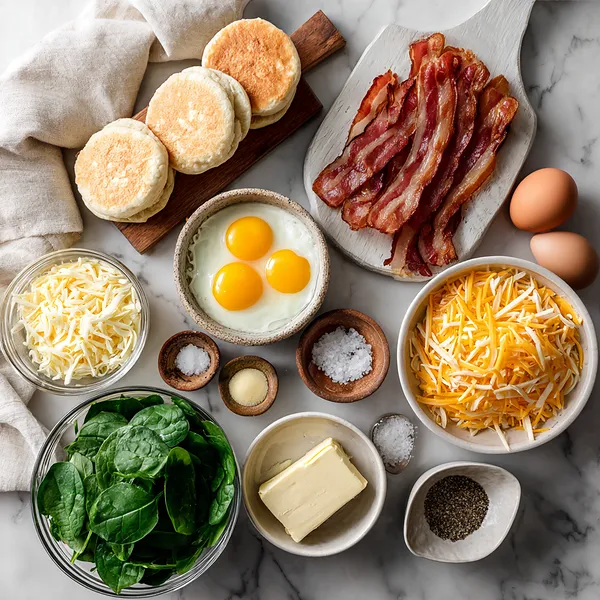
- English Muffins: Provide the bread base for the sandwich; choose hearty varieties that won't become soggy after freezing.
- Bacon Strips: Cooked until crispy and layered between the egg and cheese for smoky, salty flavor.
- Large Eggs: Cooked to just set with slightly runny yolks, creating a creamy center that reheats perfectly.
- Cheddar Cheese: Shredded and melted directly on the warm egg, providing richness and binding the ingredients together.
- Fresh Spinach: Wilted and added for nutritional value, color, and a fresh note that balances the savory bacon and cheese.
Let's Make These Together
- Cook bacon until crispy
- Begin by cooking bacon strips in a large skillet over medium-high heat. The goal is to achieve a crispy texture that will hold up well to freezing and reheating. This typically takes about 10 minutes depending on your skillet size and the thickness of your bacon. Once cooked, transfer to paper towels to drain excess grease. This step can be done in batches to ensure all bacon cooks evenly and maintains its crispiness throughout the assembly process.
- Toast the English muffins lightly
- Using the same skillet (this adds residual bacon flavor), butter the split English muffin halves and toast them over medium heat until they turn golden brown. This should take approximately 3-4 minutes total. Toasting is crucial because it creates a barrier that prevents the sandwich from becoming soggy when frozen and then reheated. A well-toasted muffin maintains its structure and texture far better than an untoasted one.
- Cook eggs to perfect doneness
- Crack eggs directly into the skillet and cook over medium heat until the whites are fully set but the yolks remain slightly runny. This takes about 3-4 minutes depending on your heat level. Slightly undercooked yolks are essential because when you reheat the sandwich, the residual heat will finish cooking the yolk perfectly without making it rubbery. Season immediately with salt and pepper while the eggs are still in the skillet.
- Wilt spinach and remove excess moisture
- In a separate small skillet, melt a touch of butter and add the fresh spinach. Cook for just 1-2 minutes, stirring occasionally, until the spinach becomes wilted and dark green. This is critical because fresh spinach contains significant water content. After wilting, carefully press the spinach with a spatula to remove excess moisture. This prevents your frozen sandwiches from becoming watery and maintains the structural integrity of each layer.
- Assemble and wrap with precision
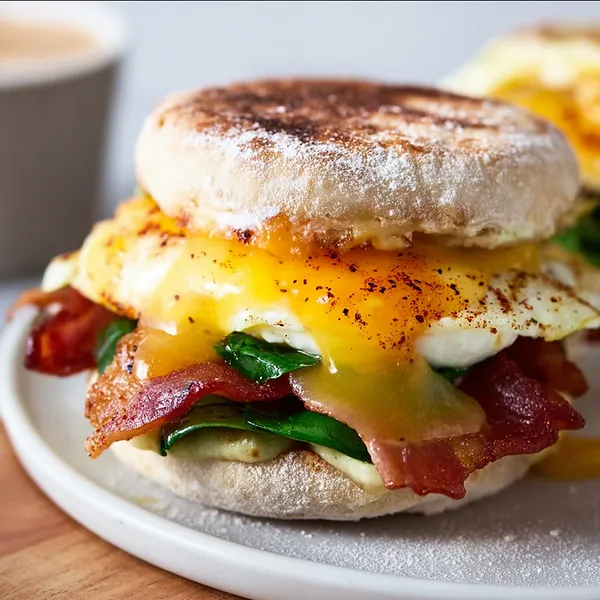
- On a clean work surface, begin layering each sandwich component in the same order for consistency: toasted muffin bottom, wilted spinach, cooked egg, two strips of bacon, pinch of shredded cheddar, and the toasted muffin top. Once assembled, allow the sandwich to cool slightly, then wrap it individually in parchment paper followed by aluminum foil. The parchment creates an extra barrier, and the foil protects against freezer burn. Label each packet with the current date using a permanent marker.
 pin it
Switch Things Up
I discovered the magic of freezer breakfast sandwiches when I was juggling a new job and early morning meetings. My mornings were chaotic until I decided to dedicate one Sunday afternoon to assembly-line breakfast sandwich prep. I made a dozen, wrapped them individually in foil, and froze them. The next morning, I grabbed one, heated it for 30 seconds in the microwave, and had a complete hot breakfast in my hand as I walked out the door. That first bite—crispy bacon, melted cheese, and the perfect runny yolk—made me realize I'd stumbled onto something brilliant. Now I make them every couple of weeks.
Perfect Pairings
Serve Freezer Breakfast Sandwiches alongside fresh fruit like berries or sliced melon for a refreshing contrast to the rich, savory sandwich. A glass of cold orange juice or fresh-squeezed grapefruit juice complements the breakfast perfectly. For a heartier meal, pair with crispy breakfast potatoes or a simple green salad. Coffee—whether hot or iced depending on the season—is the ideal beverage companion to cut through the richness of the cheese and butter.
 pin it
Frequently Asked Questions
- → How long can I store these sandwiches in the freezer?
These freezer breakfast sandwiches can be stored safely for up to 3 months when properly wrapped and stored in a freezer-safe container. After 3 months, quality and texture may begin to decline. Always label your packets with the date of preparation to keep track of freshness.
- → What's the best way to reheat a frozen breakfast sandwich?
The quickest method is to remove the aluminum foil and parchment paper, wrap the sandwich loosely in a paper towel, and microwave for 30-40 seconds. For a crispier result, place the unwrapped sandwich on a baking sheet and warm in a 350°F oven for 5-7 minutes until heated through. Both methods deliver great results depending on your preference.
- → Can I customize the fillings in these sandwiches?
Absolutely! These sandwiches are highly customizable. Try different cheeses like Swiss or Monterey Jack, swap regular bacon for Canadian bacon or sausage, add avocado for creaminess, or include diced tomatoes for freshness. Just ensure that any moist ingredients are drained well to prevent the sandwich from becoming soggy.
- → Why does my egg yolk run out when I bite into the sandwich?
This happens because the egg is cooked just enough to set the whites while keeping the yolk runny, which creates the signature creamy center. If you prefer a fully cooked yolk, cook the eggs for an additional 1-2 minutes before assembly. The slight runniness when eaten fresh is intentional for that luxurious texture.
- → Is there a difference between using fresh spinach versus frozen spinach?
Fresh spinach is recommended because it can be precisely wilted and wrung out to remove moisture. Frozen spinach contains significantly more water and can make your sandwiches soggy even after thorough draining. If you must use frozen spinach, thaw it completely and press it very thoroughly between paper towels to remove as much moisture as possible.
Conclusion
These freezer breakfast sandwiches are the answer to hectic mornings. Prep a batch on Sunday and enjoy restaurant-quality breakfast all week long without the guilt or the grease. Perfect for families, busy professionals, or anyone who values their sleep-in time. Make them once, and you'll be making them forever.