
 pin it
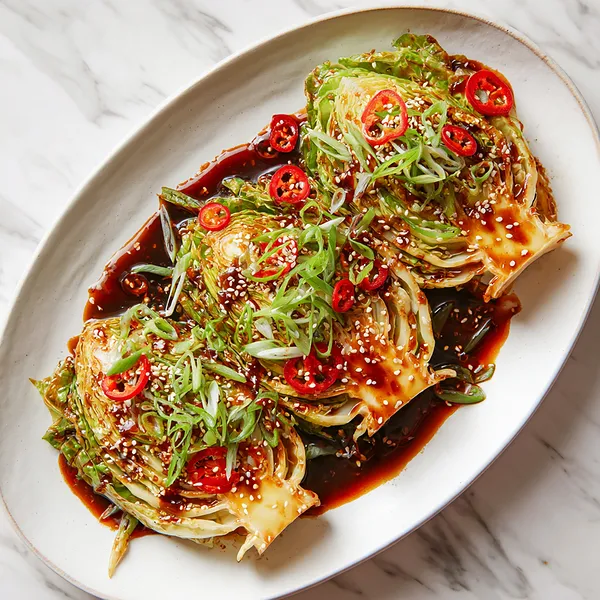
I first encountered roasted cabbage at a small Korean-Japanese fusion restaurant tucked into a side street, and honestly I ordered it by accident — I thought it was going to be something forgettable. What arrived on the table was a revelation. The cabbage was roasted until the outer leaves were almost crispy, the inside still tender and juicy, and it was drowning in this glossy, dark sauce that had garlic, ginger, soy, and just enough chili heat to make every bite exciting. I watched the steam rise from the plate and I knew immediately I had to recreate this at home. It took me a few tries to get the glaze balance right — not too sweet, not too salty, with just enough acid from the rice vinegar to cut through the richness. Now this recipe lives in my regular rotation and I make it whenever I want something that feels special but takes almost no effort. It's one of those dishes that makes people stop mid-bite and ask for the recipe.
Why I love this recipe
I love this recipe because it completely defies expectations. Cabbage is one of the most underrated vegetables in the world and this dish is my argument for why it deserves way more respect. The transformation that happens in the oven is almost magical — what goes in as a simple wedge of leafy greens comes out as this deeply caramelized, slightly smoky, tender-yet-textured masterpiece. The glaze is everything: it has the saltiness of soy, the depth of oyster sauce, the warmth of ginger, the kick of chili, and the nuttiness of sesame oil all working together in perfect harmony. I also love how forgiving and adaptable it is — you can dial up the heat, swap in hoisin to keep it fully vegan, or add a squeeze of lime at the end for brightness. It's fast, it's affordable, and every single time I make it, people are genuinely impressed. That combination is rare and I will never stop making this dish.
What You Need From Your Kitchen
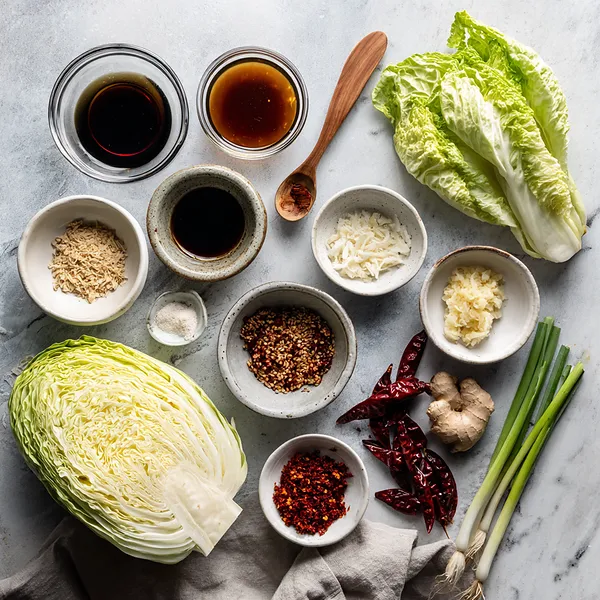
- Napa Cabbage: Cut lengthwise into halves or quarters, keeping the core intact, brushed with oil and roasted at high heat until caramelized and tender
- Soy Sauce: Forms the salty, umami base of the glaze — use low-sodium if preferred
- Oyster Sauce: Adds deep savory richness and glossy body to the glaze — substitute hoisin for a vegan version
- Sesame Oil: Drizzled into the glaze for nutty aroma and depth
- Fresh Garlic: Minced and whisked into the sauce for bold, pungent flavor that softens and caramelizes in the oven
- Fresh Ginger: Grated into the glaze for warm, slightly spicy brightness
- Red Chilies: Sliced into rounds and scattered on top as a fresh, fiery garnish
- Scallions: Thinly sliced and used as a fresh finishing garnish over the hot glazed cabbage
Let's Make These Together
- Preheat and prep your pan
- Set your oven to 220°C (425°F) and line a large baking sheet with parchment paper. Getting your oven screaming hot before the cabbage goes in is the single most important step — this is what creates that gorgeous caramelization and char on the cut sides instead of just steaming the leaves.
- Cut and oil the cabbage
- Slice your napa cabbage lengthwise into halves or quarters, making sure to leave the core in place — that little piece of stem is what holds your wedge together through roasting and flipping. Brush the cut surfaces generously with neutral oil and hit them with a small pinch of salt before laying them cut-side down on the pan.
- Build your glaze
- In a small bowl, bring together the soy sauce, oyster sauce, sesame oil, minced garlic, grated ginger, rice vinegar, chili flakes, and brown sugar. Whisk until the sugar is dissolved and the mixture is completely smooth. Give it a taste — it should hit salty, savory, slightly sweet, and warm all at once. Adjust to your preference before it goes anywhere near the cabbage.
- First round in the oven
- Slide your cabbage wedges into the hot oven cut-side down and let them roast undisturbed for about 12 minutes. You want those undersides to turn deeply golden with charred edges before you flip. Use tongs to turn each wedge over, then spoon or brush a generous amount of glaze over the top, letting it sink down between the leaves.
- Glaze, roast, and caramelize
- Return the pan to the oven for another 10 to 13 minutes. The glaze will bubble, thicken, and caramelize onto the cabbage as it finishes cooking. If you want extra drama on the edges, flip on the broiler for the final 2 minutes and watch it closely — it goes from perfect to too dark very quickly at that stage.
- Plate and finish with garnishes
- Lift your roasted cabbage wedges onto a serving platter and spoon over any remaining caramelized glaze from the pan. Shower the top generously with sliced scallions, fresh red chili rounds, and toasted sesame seeds. Serve immediately while the glaze is still hot and glistening.
 pin it
Switch Things Up
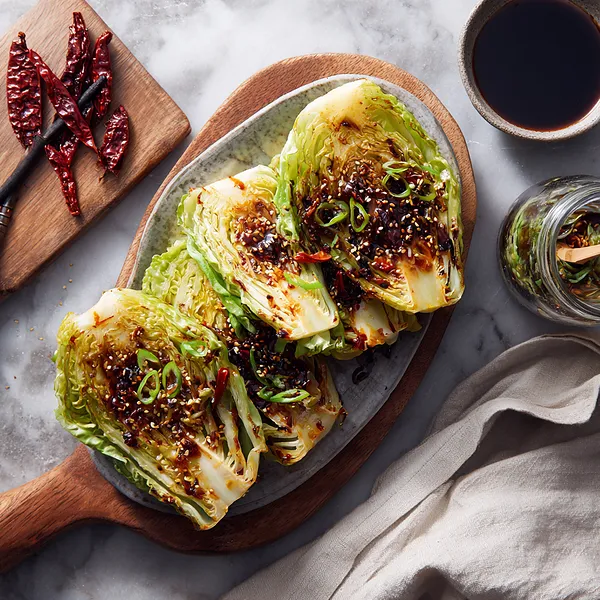
I made this on a quiet weeknight when the fridge was almost empty and all I had was a head of napa cabbage and some pantry staples. I was skeptical — cabbage as the main event? But the moment those wedges hit the hot oven and I drizzled that soy-ginger glaze on top, my whole kitchen smelled incredible. The caramelized edges, the sticky sauce soaking into every leaf, the pop of fresh scallions — I ended up eating two full wedges straight from the serving plate before it even made it to the table. Sometimes the simplest things hit the hardest.
Perfect Pairings
This glazed roasted cabbage pairs beautifully with steamed jasmine rice or a bowl of garlic fried rice to soak up every drop of that umami glaze. It also sits perfectly alongside crispy tofu, teriyaki salmon, or grilled chicken thighs for a complete meal. For a lighter option, serve it next to a cold sesame noodle salad or miso soup. A cold glass of iced green tea or a dry sake rounds out the whole experience perfectly.
 pin it
Frequently Asked Questions
- → Can I use regular green cabbage instead of napa cabbage?
Yes, regular green cabbage works well in this recipe. It has a denser texture than napa cabbage so it may need an extra 5 minutes of roasting time. The flavor is slightly more peppery, but the glaze works beautifully on it all the same.
- → How do I make this recipe fully vegan?
Simply replace the oyster sauce with hoisin sauce or a vegan mushroom-based stir-fry sauce. All other ingredients in the glaze are already plant-based, so it is an easy swap that does not compromise the flavor much at all.
- → Can I make the glaze ahead of time?
Absolutely. The soy-chili glaze can be prepared up to 3 days in advance and stored in a sealed jar or airtight container in the refrigerator. Just give it a quick stir or shake before using since the ingredients may settle slightly.
- → Why does my cabbage turn out soggy instead of caramelized?
This usually happens when the oven is not hot enough or when the cabbage is overcrowded on the pan. Make sure your oven is fully preheated to 220°C (425°F) and that the cabbage wedges have space between them so the heat can circulate properly and roast rather than steam.
- → What can I serve with this roasted cabbage?
This dish pairs wonderfully with steamed jasmine rice, garlic fried rice, crispy tofu, teriyaki salmon, or grilled chicken. It also sits beautifully alongside miso soup or cold sesame noodles for a fully plant-based spread.
- → Can I add protein directly to this dish?
Yes — thinly sliced beef, shrimp, or cubed firm tofu can be roasted alongside the cabbage on the same pan. Just make sure not to overcrowd the sheet and adjust cooking times depending on the protein you choose.
Conclusion
This Asian Glazed Roasted Cabbage is proof that humble vegetables can steal the entire show. With its caramelized edges, bold umami glaze, and a satisfying crunch of sesame seeds and chili, it transforms a simple head of cabbage into something genuinely craveable. Whether you serve it as a side or make it the star of your table, this recipe is one you will keep coming back to again and again.