
 pin it
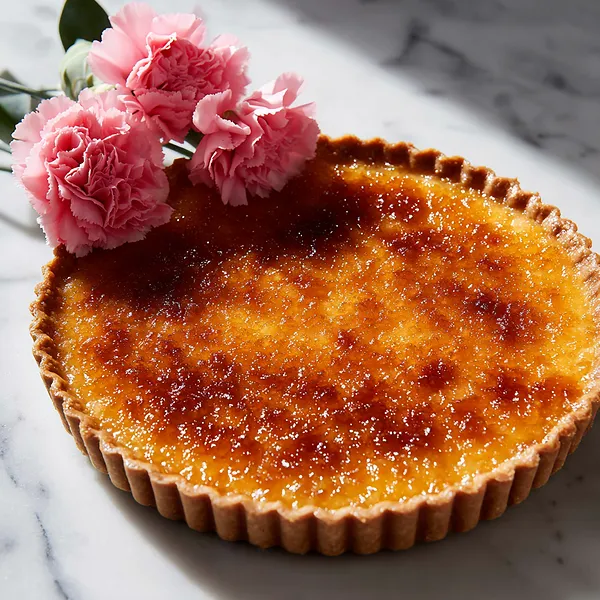
I remember the first time I saw a grapefruit crème brûlée tart at a small French bakery tucked into a side street. It was displayed under a glass dome and the sugar top was this deep, burnished amber that caught the light like stained glass. I ordered a slice without hesitation and that first tap of the spoon through the sugar crust — that unmistakable crack — followed by the cold, silky, gently bitter-sweet grapefruit custard underneath was genuinely one of the most satisfying dessert experiences I'd ever had. The pastry shell was impossibly buttery and short, just barely holding everything together. I knew immediately I had to learn to make it myself. After several attempts at home I finally nailed the custard texture — the key is low heat and patience — and now this tart has become one of my most beloved recipes. Every single time I make it, that crackle of the sugar crust still excites me.
Why I love this recipe
I love this recipe because it manages to be simultaneously elegant and approachable. The individual components — a simple shortcrust pastry, a poured custard, a sugar top — are all things home bakers do regularly, but when they come together in this tart they create something that feels genuinely extraordinary. I also love the grapefruit element specifically because it brings a brightness and a slight bitterness that makes the custard feel refined rather than cloying. Most crème brûlée desserts are very rich and sweet, but the grapefruit juice cuts right through that and keeps every bite feeling light and fresh. And honestly — the torch moment never gets less satisfying. Watching that sugar melt and bubble and caramelize into that gorgeous amber shell is pure joy every single time.
What You Need From Your Kitchen
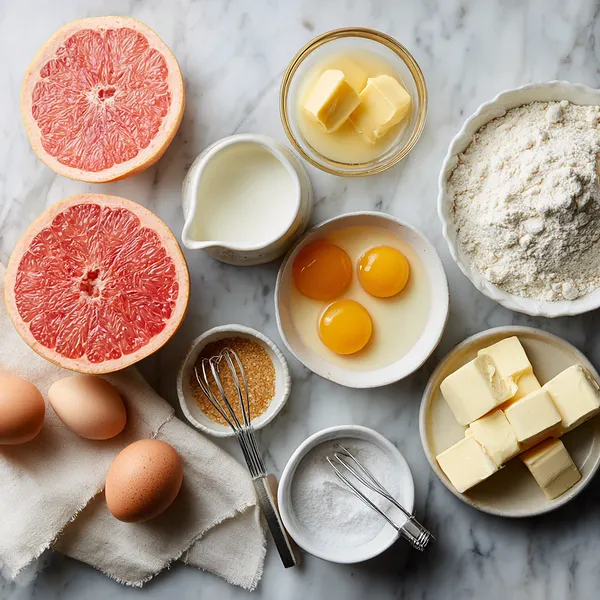
- Pink Grapefruit: Freshly squeezed for the custard filling — provides the signature citrus flavor and beautiful pale color of the tart.
- Heavy Cream: Forms the silky, rich base of the custard — use full-fat cream for the best texture and flavor.
- Egg Yolks: Used both in the pastry for richness and in the custard to create that luxuriously smooth, set filling.
- Unsalted Butter: Cold and cubed for the pastry dough — creates that irresistible flaky, melt-in-your-mouth shortcrust texture.
- All-Purpose Flour: The foundation of the buttery pastry shell that holds the entire tart together.
- Raw Sugar: Sprinkled on top and torched to create the signature crackling caramelized brûlée crust that makes this tart so iconic.
- Grapefruit Zest: Adds an aromatic citrus depth to the custard that the juice alone cannot provide.
Let's Make These Together
- Mix and chill the pastry dough
- Combine flour and powdered sugar, then rub in cold cubed butter until the mixture looks like coarse crumbs. Add the egg yolk and just enough ice water to bring the dough together without overworking it. Flatten into a disc, wrap it up, and pop it in the fridge for 30 minutes to relax and chill properly.
- Roll out and blind bake the shell
- Preheat your oven to 375°F. Roll the chilled dough to about 1/8 inch thick and press it carefully into your fluted tart pan. Prick the base with a fork, line with parchment and pie weights, and bake for 15 minutes. Remove the weights and bake another 8 minutes until lightly golden. Cool completely before filling.
- Whisk together the grapefruit custard
- Whisk the egg yolks and sugar together until pale. Gently warm the heavy cream and grapefruit juice together in a saucepan until just barely steaming — not boiling. Pour this warm mixture slowly into the egg yolks in a thin stream while whisking constantly to temper them beautifully. Stir in the zest and vanilla.
- Fill and bake at low temperature
- Lower the oven to 300°F. Set your cooled tart shell on a baking sheet and carefully pour the custard in. Bake for 30 to 35 minutes until the edges are set but the center still has a gentle wobble. Let cool to room temperature then refrigerate for at least 2 hours until fully chilled and firm.
- Torch the sugar to amber perfection
- Just before serving, sprinkle an even layer of raw sugar across the entire custard surface. Use your kitchen torch in small circular motions to caramelize the sugar until it melts and turns a deep, gorgeous amber. Move the flame constantly for the most even and beautiful brûlée crust.
- Rest, garnish, and serve
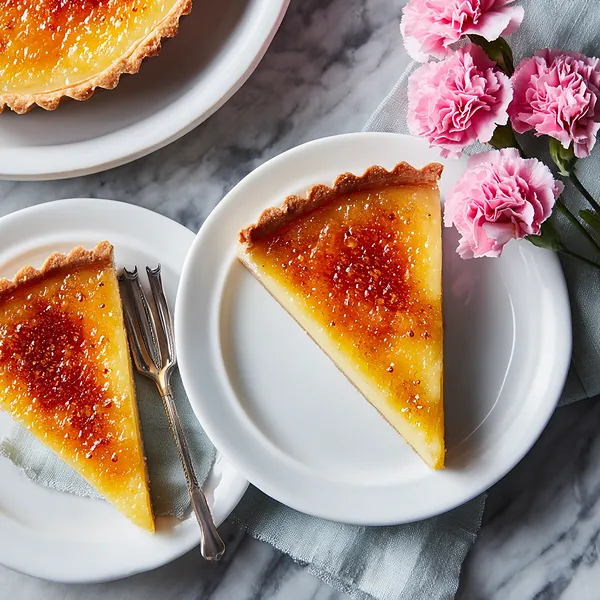
- Let the tart rest 2 to 3 minutes after torching so the caramel sets into that satisfying crackling shell. Tuck a few pink carnations or edible flowers in one corner, remove the tart from its pan, and slice carefully with a sharp knife. Serve immediately and enjoy that glorious crack.
 pin it
Switch Things Up
I made this tart for the first time on a whim after I had half a bag of grapefruits sitting on my counter. I'd been making classic crème brûlée for years and thought — why not put it in a tart shell? The first time I torched the sugar top I genuinely stood in my kitchen and just stared at it because I couldn't believe something I made at home looked so stunning. The caramel crackle, the pale golden custard underneath, the fluted pastry edges — it looked like it came out of a Parisian patisserie. I've made it at least a dozen times since and it never gets old.
Perfect Pairings
This grapefruit crème brûlée tart pairs beautifully with a dollop of lightly whipped cream or a scoop of vanilla bean ice cream on the side. For a drink pairing, a glass of Champagne or a sparkling rosé is perfect — the bubbles and light acidity complement the citrus custard wonderfully. A cup of Earl Grey tea or a delicate jasmine green tea also makes a lovely accompaniment. For a full dessert spread, serve alongside fresh strawberries or a small bowl of mixed berry coulis.
 pin it
Frequently Asked Questions
- → Can I make this tart the day before serving?
Yes! You can make the pastry shell and bake the custard filling up to one day in advance. Store the tart covered in the refrigerator. However, always torch the sugar brûlée topping right before serving — the caramel crust will become soft and sticky if refrigerated after torching.
- → What can I use if I don't have a kitchen torch?
You can use your oven's broiler as an alternative. Sprinkle the sugar on top and place the chilled tart under a very hot broiler for 2 to 4 minutes, watching extremely carefully until the sugar caramelizes. The result won't be quite as even as a torch, but it still works. Keep a very close eye on it to avoid burning.
- → Can I use regular oranges instead of grapefruit?
Absolutely! Blood orange juice makes an especially stunning and flavorful alternative with a beautiful ruby color. Regular navel orange juice works too for a sweeter, milder custard. Lemon or Meyer lemon are also wonderful options if you prefer a more tart flavor profile.
- → Why is my custard filling not setting properly?
This is usually caused by one of two things — either the oven temperature was too high, which can cause the eggs to overcook and create a watery texture, or the tart was underbaked. The custard should have a very slight wobble in the very center when you remove it from the oven. It will finish setting as it cools and chills in the refrigerator.
- → How do I prevent the pastry from shrinking during blind baking?
Make sure you don't stretch the pastry when pressing it into the tart pan — let it fall naturally into the flutes. Resting the lined tart shell in the freezer for 10 minutes before blind baking helps significantly. Also, make sure the pie weights fill the shell fully to support the sides during baking.
- → Can I make mini individual tarts instead of one large tart?
Yes! This recipe works beautifully as individual mini tarts using 4-inch tartlet pans. Reduce the custard baking time to approximately 20 to 25 minutes and check for that gentle center wobble. Each mini tart gets its own brûlée topping torched right before serving — they make gorgeous individual dessert presentations.
Conclusion
This grapefruit crème brûlée tart is the kind of dessert that makes people stop mid-conversation when it arrives at the table. The contrast of that shattering caramel crust against the cool, silky citrus custard beneath is nothing short of extraordinary. Once you master this, it becomes your signature showstopper for every special occasion.