
 pin it
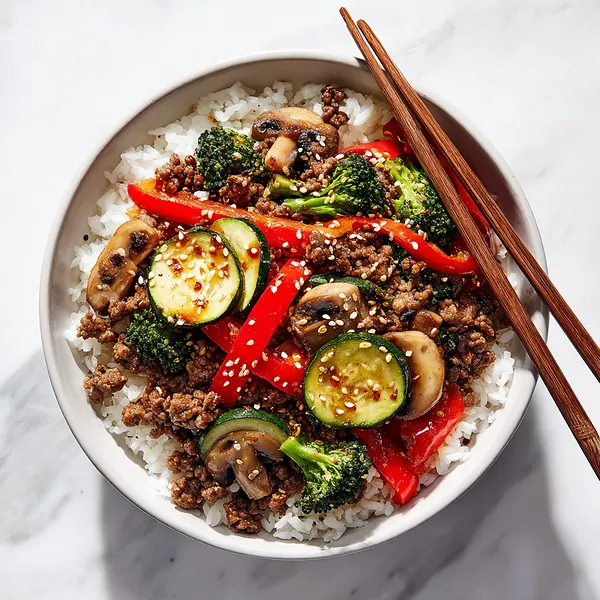
I first encountered a bowl like this at a tiny Korean lunch spot tucked into a busy street market. It was nothing fancy — just a big white bowl loaded with rice, seasoned beef, and a colorful assortment of vegetables. But that first bite stopped me in my tracks. The beef was deeply savory with this sweet-salty glaze that I couldn't quite place, and every vegetable had been cooked just enough to stay slightly crisp while soaking up all that incredible sauce. I went back three times that week. When I got home, I was determined to recreate it. After a few rounds of testing, I landed on this version — ground beef makes it weeknight-friendly, the sauce comes together in seconds, and the vegetable combo of mushrooms, zucchini, broccoli, and red pepper gives you that satisfying variety in every single bite. It's become one of those recipes I make on autopilot, and somehow it tastes just as exciting every single time.
Why I love this recipe
What I love most about this Korean Beef Rice Bowl is how it delivers maximum flavor with minimal effort. The sauce — soy sauce, sesame oil, brown sugar, garlic, and ginger — is so simple, yet it transforms plain ground beef into something that tastes genuinely special. I also love how versatile it is. You can swap the vegetables based on whatever you have on hand, use cauliflower rice to keep it lighter, or add a fried egg on top for extra richness. It's the kind of recipe that never feels boring because you can change it up endlessly. And that combination of textures — tender beef, slightly crisp vegetables, soft fluffy rice — makes every bite satisfying in a way that leaves you actually full and happy. No sad desk lunches here.
What You Need From Your Kitchen
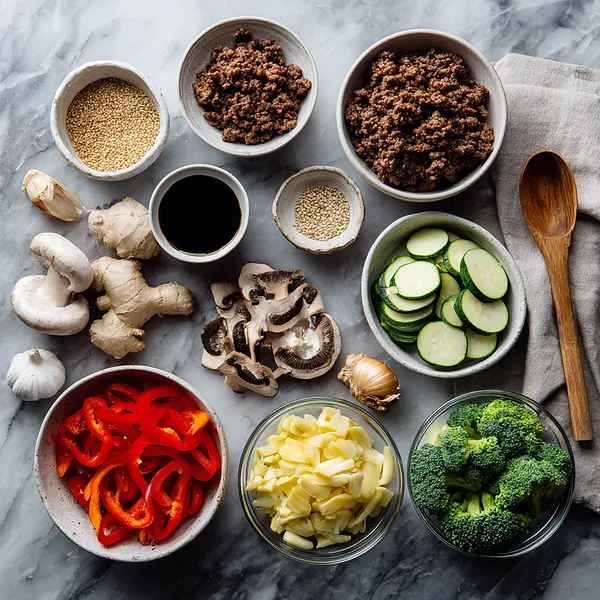
- Ground Beef: Brown in a hot skillet until fully cooked, breaking into small crumbles for the best texture with the sauce.
- Broccoli Florets: Steam or blanch briefly until bright green and just tender — do not overcook.
- Mushrooms: Slice and sauté until golden brown to develop a rich, meaty depth of flavor.
- Zucchini: Slice into rounds or half-moons and sauté until just tender with a slight bite.
- Red Bell Pepper: Slice into thin strips and cook briefly to keep the color vibrant and the crunch intact.
- Soy Sauce: The backbone of the Korean-style sauce — use low-sodium if preferred.
- Sesame Oil: Add to the sauce for that distinctive nutty, toasty Korean flavor.
- Brown Sugar: Balances the saltiness of the soy sauce and helps the sauce caramelize beautifully.
Let's Make These Together
- Make the Korean sauce
- Whisk together soy sauce, sesame oil, brown sugar, minced garlic, and grated ginger in a small bowl until the sugar fully dissolves. This sauce is the heart of the whole dish, so taste it and adjust the balance of sweet and salty to your preference before cooking.
- Brown the ground beef
- Heat oil in a large skillet over medium-high heat. Add the ground beef and break it apart as it cooks. You want it nicely browned — not just steamed — so resist stirring too often and let it get some color for maximum flavor.
- Simmer beef in sauce
- Pour the prepared sauce over the browned beef and stir to coat. Let it bubble and simmer for 2–3 minutes so the sauce thickens and clings to every piece of beef with that gorgeous glossy finish.
- Sauté the vegetables separately
- In the same skillet, cook the mushrooms first until golden, then add zucchini and red bell pepper. Cooking them separately from the beef keeps their texture perfect and their colors vibrant rather than steaming them into mush.
- Steam the broccoli
- Blanch or steam the broccoli florets for just 2–3 minutes until bright green and barely tender. You want them to pop with color and provide a fresh contrast to the rich savory beef.
- Build your bowl and serve
- Scoop rice into each bowl and arrange the beef and all vegetables in separate sections for that stunning visual presentation. Finish with sesame seeds and scallions, and serve immediately while everything is hot.
 pin it
Switch Things Up
One evening I was staring into the fridge with zero inspiration — just ground beef, some sad-looking zucchini, and leftover rice. I threw together this bowl on a whim, basically improvising the sauce as I went. The moment that beef hit the pan with the garlic and soy sauce, the whole kitchen smelled like a Korean BBQ spot. I tossed in whatever veggies I had, and honestly? It turned out better than I expected. Now it's my go-to when I want something seriously satisfying without spending hours cooking. Sometimes the best recipes come from the most uninspired moments.
Perfect Pairings
This Korean Beef Rice Bowl pairs wonderfully with a simple miso soup or a light cucumber kimchi on the side for an authentic Korean-inspired spread. A cold glass of barley tea or an iced green tea complements the savory-sweet beef beautifully. If you want to go all out, serve it alongside japchae (glass noodles) or a soft-boiled soy-marinated egg for extra richness and protein.
 pin it
Frequently Asked Questions
- → Can I use a different protein instead of ground beef?
Absolutely! Ground turkey, ground chicken, or even ground pork work beautifully with the Korean sauce. For a vegetarian version, try crumbled firm tofu or cooked lentils — they soak up the soy-sesame glaze wonderfully.
- → Can I make this recipe gluten-free?
Yes! Simply swap the regular soy sauce for tamari or a certified gluten-free soy sauce and the rest of the recipe is naturally gluten-free. Everything else in the ingredient list is safe.
- → How do I store and reheat leftovers?
Store the beef and vegetables separately from the rice in airtight containers in the refrigerator for up to 4 days. Reheat in a skillet over medium heat with a splash of water, or microwave covered for 1–2 minutes until heated through.
- → Can I meal prep this Korean beef bowl?
This recipe is one of the best for meal prepping! Cook a big batch of the Korean beef and portion it into containers with rice and whatever vegetables you like. It keeps well in the fridge for 4 days and the flavors actually get even better the next day.
- → What can I substitute for sesame oil?
If you don't have sesame oil, you can use a small amount of toasted sesame seeds blended with a neutral oil, or simply skip it. The flavor will be slightly less nutty but the dish will still be delicious. Avoid substituting with regular vegetable oil as the flavor profile will be very different.
- → Can I add more spice to this recipe?
Definitely! Add a teaspoon of gochujang (Korean chili paste) or red pepper flakes to the sauce for a spicy kick. You can also drizzle sriracha or chili oil over the finished bowl right before serving.
Conclusion
This Korean Beef Rice Bowl is the kind of meal that earns a permanent spot in your weekly rotation. It's fast, filling, and packed with bold flavors that taste like you ordered from your favorite Korean restaurant — except you made it at home in 30 minutes. The colorful vegetables make every bowl feel fresh and vibrant, and the savory sesame-soy beef ties it all together beautifully. Make it once and you'll never look back.