
 pin it
The first time I made this lasagna I invited a few neighbors over on the promise of something showy. I had stubbornly wanted a recipe that tasted indulgent without being fussy, and that night the kitchen steamed, the house smelled like red wine and garlic, and everyone lingered at the table. I learned very quickly that a good lasagna is as much about patience as it is about ingredients.
My version leans on a deeply flavored ragù, a silky béchamel for lift, and a ricotta mixture whipped with an egg and a handful of Parmesan for creaminess. I use a mix of ground beef and pork so the sauce has both savory depth and a little sweetness, and I simmer the tomatoes long enough that the sauce reduces and becomes glossy rather than watery. Those small choices make a big difference: each slice holds together, the flavors are layered, and the texture is just right.
Expect a couple of hours of hands-on plus a comforting bake. The work is mostly simmering and assembly—no tricky techniques—so it’s a great weekend project. The dish travels and reheats very well; it is the sort of recipe you can proudly make ahead for a gathering, freeze a pan for later, or serve to guests who will ask for the recipe.
Why I love this recipe
This lasagna gives you contrasts that feel deliberate: a slow-reduced ragù that is almost jammy, a béchamel that brightens the mouth, and pockets of melted mozzarella that pull like a good memory. The texture is layered—soft pasta, creamy cheese pockets, and just enough savory meat to make each bite satisfying without being greasy.
Timing is honest: you need to simmer, assemble, and bake, but there are natural pauses for chopping, grating and folding that make the work manageable. Budget-wise, it’s flexible; a modest blend of ground meats and a good canned tomato will carry you, while small upgrades—fresh ricotta, whole milk, quality Parmesan—are where the “million dollar” feeling comes from. Leftovers reheat beautifully in a 350°F oven until the centre is hot and the edges bubble again, and the lasagna is the kind of crowd-pleaser that feeds hungry family members and picky teens alike. It also freezes well, so you can make a double batch and feel smug on a busy weeknight.
What You Need From Your Kitchen
- Ground beef and pork: Use a 50/50 mix for savory depth and balanced fat content while browning.
- Canned crushed tomatoes: Choose quality tomatoes; simmer long so the sauce thickens and sweetens naturally.
- Tomato paste: Caramelize briefly to deepen flavor before adding wine and crushed tomatoes.
- Whole milk and butter: These make the béchamel rich and silky; do not substitute with skim milk.
- Ricotta and egg: Whisk egg into ricotta for binding and a lighter, sliceable filling texture.
- Mozzarella cheese: Use low-moisture mozzarella, grated or torn, to avoid a watery top layer.
- Parmesan cheese: Freshly grated adds sharp, nutty acid that brightens the entire casserole.
- Fresh basil: Stirred into the ricotta or scattered between layers for a fresh herbal note.
Let's Make These Together
- Build the ragù
- Begin by sweating onion, carrot and celery in olive oil over medium heat until soft and translucent. Add the meat and let it brown without overcrowding so caramelized bits develop. Once the meat is deeply browned and the pan smells rich and toasted, deglaze with wine and add tomatoes; the sauce is ready when it becomes glossy and coats a spoon.
- Make béchamel
- Melt butter in a saucepan over medium heat and whisk in flour to form a roux; cook until fragrant. Gradually whisk in warmed milk and simmer gently until the sauce thickens and coats the back of a spoon. It is ready when it’s velvety, has no floury taste and you can drag a wooden spoon through it leaving a clean line.
- Prep the cheese mix
- In a bowl beat ricotta with one egg, grated Parmesan, a pinch of nutmeg and chopped basil until slightly loosened. Taste for salt. The mixture is ready when it spreads easily but still holds shape—this keeps the layers distinct and prevents the lasagna from becoming soupy after baking.
- Assemble layers
- Spread some ragù in the bottom of a baking dish, then a thin film of béchamel, then noodles, ricotta, ragù and shredded mozzarella. Repeat and finish with mozzarella and Parmesan. The lasagna is ready for the oven when the top is evenly covered and you see sauce peeking at the edges, promising bubbling and browning.
- Bake and rest
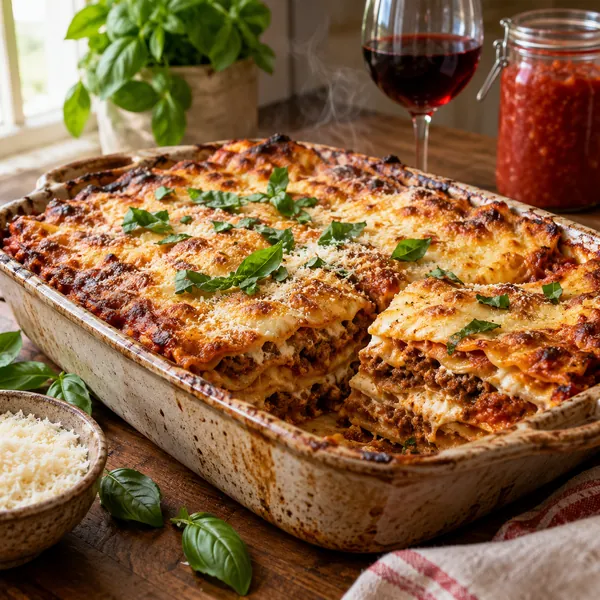
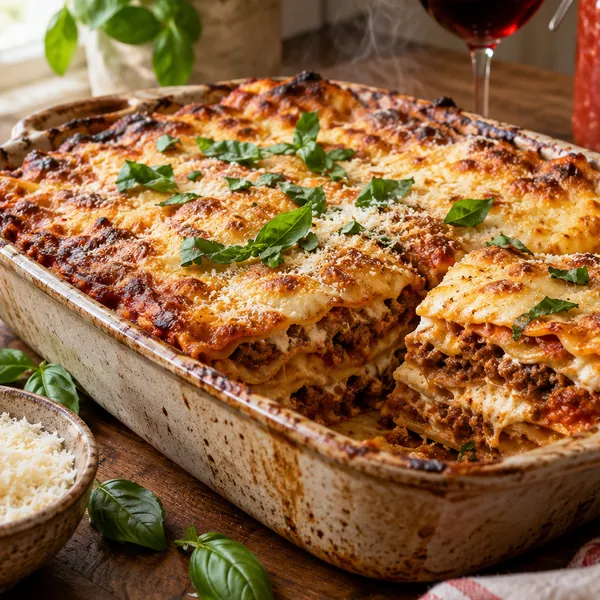
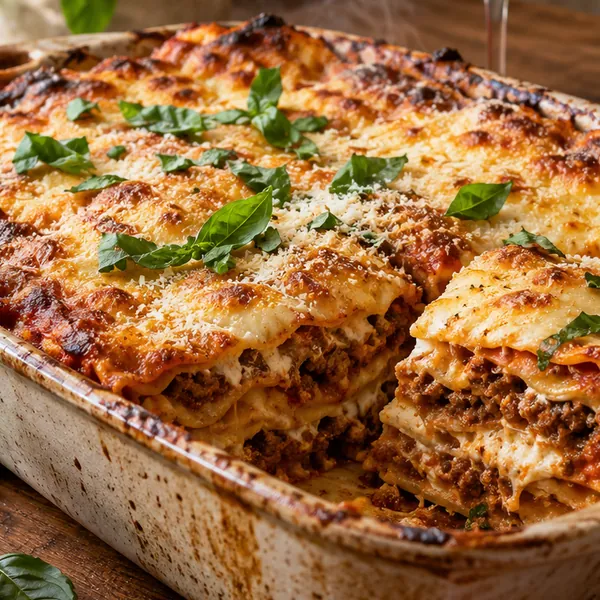
- Bake the lasagna at 375°F for 40 to 50 minutes until the top is bubbling and golden and the centre registers hot. Let it rest uncovered for 20 to 30 minutes; the internal steam will set the layers and the slice will hold its shape when cut—this resting is the feel-good, patient part.
- Finish and serve
- After resting, garnish with fresh basil and a drizzle of good olive oil. The lasagna is ready when the cheese has set, the aroma of tomatoes and herbs fills the kitchen, and the centre no longer jiggles when nudged gently with a knife.
 pin it
Switch Things Up
I often change this lasagna depending on the pantry and guests. For a vegetarian version I swap the meat for finely chopped mushrooms and cooked lentils, which gives the filling the same meaty bite and umami depth; sauté the mushrooms until they have released most of their moisture so the layers remain firm. For a white or 'bianca' take, omit tomatoes and add wilted spinach, mascarpone and fontina with the béchamel for a creamy, lighter-coloured lasagna.
No-boil oven-ready noodles save time, but I prefer fresh pasta sheets when I can find them because they absorb sauce differently and yield a silkier bite. Gluten-free lasagna noodles work fine; just check cook times and give the assembled pan an extra five minutes in the oven if needed. I have also frozen assembled, unbaked pans; wrap tightly and bake from frozen at 375°F for about 75 minutes until the centre is piping hot.
Perfect Pairings
Serve alongside a crisp green salad dressed in lemon and olive oil to cut through the richness. Garlic-rubbed rustic bread is obvious and perfect for sopping up any leftover sauce, but a simple roasted fennel or blistered broccolini adds a welcome textural contrast. For wine, a medium-bodied Italian red such as Sangiovese or Chianti works beautifully, offering acidity to balance the béchamel and tannins to stand up to the meat. Finish with a light dessert like lemon biscotti or gelato to keep the meal feeling celebratory rather than heavy.
 pin it
Frequently Asked Questions
- → Can I assemble the lasagna ahead of time?
Absolutely. You can assemble it up to 24 hours ahead, tightly covered and refrigerated. Bring it to room temperature for about 30 minutes before baking to ensure even cooking, then bake at 375°F until bubbling and golden, adding a few extra minutes if the dish starts cold.
- → Do I need to pre-cook lasagna noodles?
If using traditional dried noodles, I recommend boiling them until very al dente, about two minutes less than package directions. Oven-ready no-boil noodles save a step and work well if you have enough sauce. Fresh pasta sheets need only a brief blanch before layering for best texture.
- → How do I prevent a watery lasagna?
Cook the ragù until it’s reduced and glossy, drain excess fat after browning the meat, and avoid wet, high-moisture cheeses. Letting the baked lasagna rest uncovered for 20 to 30 minutes also helps steam escape and the layers to set, preventing a runny slice.
- → Can I freeze the lasagna?
Yes. Freeze baked lasagna in portioned containers or a whole pan for up to three months. For unbaked assembled lasagna, wrap extremely well and bake from frozen at 375°F for about 75 to 90 minutes until hot through and bubbling in the center.
- → How do I reheat leftovers?
Reheat individual slices in a 350°F oven on a sheet pan covered with foil for 15 to 20 minutes, or until the center is warmed through and the cheese begins to bubble. Microwaving works for single servings but will soften texture more than oven reheating.
- → Can I make this lighter?
You can lighten it by using lean ground turkey, reducing cheese quantities slightly, or replacing part of the béchamel with skimmed milk for a thinner sauce. Add lots of herbs and vegetables to bulk the dish without adding as much fat, and serve with a bright salad to balance richness.
Conclusion
This lasagna is the kind of recipe I make when I want a dinner that feels indulgent and reliable. It takes a little time, but nothing confounding, and the payoff is large: slices that hold together, layers that deliver different textures, and flavors that taste better the next day. Make a pan for company, freeze an extra for a busy night, and remember to rest it well before slicing. I promise the time you invest becomes the memory of a meal people will ask about.