
 pin it
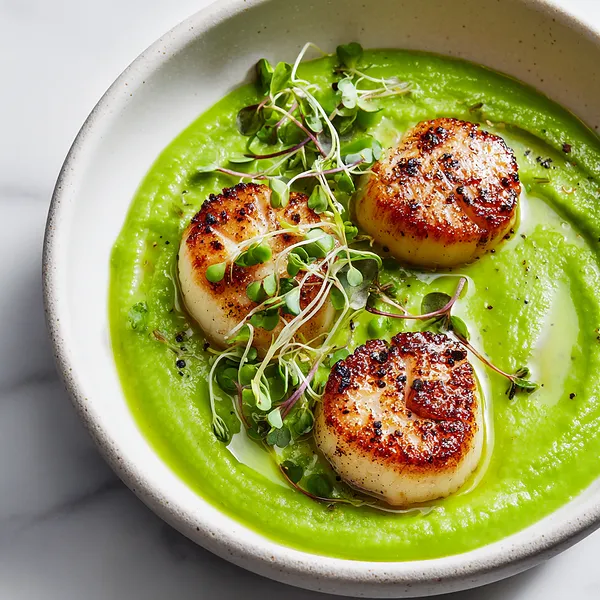
I first encountered pan-seared scallops at a tiny French bistro tucked away on a cobblestone street, and I remember being completely speechless when the plate arrived. The scallops were perfectly golden, almost caramel-like in color, sitting atop this cloud of vivid green puree that tasted like spring itself. I spent weeks trying to recreate it at home, reading everything I could about getting that crust just right — the key, I learned, was an absolutely dry scallop and a ripping-hot pan. The pea puree was even simpler than I imagined: just peas, a little cream, garlic, and good seasoning. But together, those two components create something so much greater than the sum of their parts. It's the kind of dish that makes you slow down and actually taste every bite. Now it's one of my most-made recipes whenever I want to impress without spending hours in the kitchen.
Why I love this recipe
I love this recipe because it proves that elegant food doesn't have to be complicated. There's something so satisfying about getting that perfect golden crust on a scallop — it's one of those small cooking victories that never gets old. The sweet pea puree is endlessly versatile and comes together in minutes, but it looks and tastes like something you'd pay $30 for at a restaurant. I also love how the colors play together on the plate: that deep caramel brown against the bright spring green is genuinely beautiful. It's a dish I can make when I'm short on time but still want to feel like I'm eating something special. And honestly? The microgreens on top make me feel fancy every single time.
What You Need From Your Kitchen
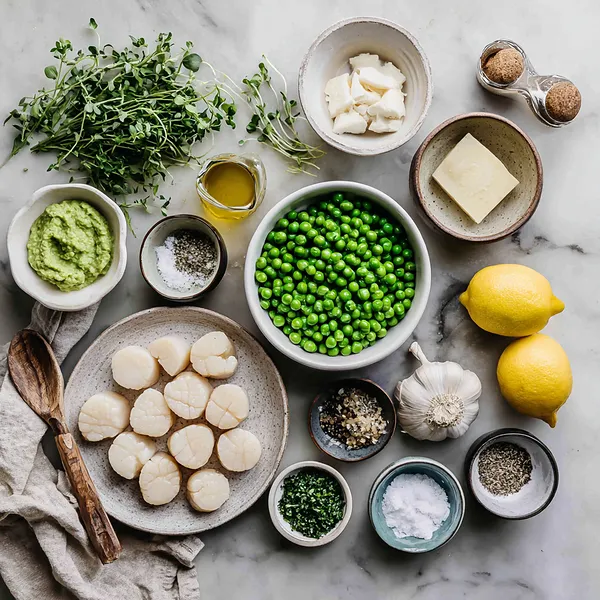
- Sea Scallops: Pat completely dry and season just before cooking for the best sear and caramelized crust.
- Sweet Peas: Blended with cream and garlic into a silky, vibrant green puree that serves as the base of the dish.
- Unsalted Butter: Added at the end of searing for butter-basting, which builds flavor and helps develop a rich golden finish.
- Heavy Cream: Stirred into the blended peas to create a luxuriously smooth and velvety puree texture.
- Garlic: Sautéed briefly with the peas before blending to add depth and aromatic flavor to the puree.
- Lemon: Freshly squeezed juice added to the puree to brighten the flavors and balance the richness of the cream.
- Microgreens: Used as a fresh, delicate garnish that adds color, texture, and a subtle peppery flavor to the finished plate.
Let's Make These Together
- Make the pea puree base
- Add sweet peas and broth to a small saucepan over medium heat. Cook for 3–4 minutes until the peas are tender and their color is vibrant bright green. Add minced garlic and stir for another minute until fragrant.
- Blend until silky smooth
- Pour the pea mixture into a blender along with heavy cream, fresh lemon juice, salt, and pepper. Blend on high until the puree is completely smooth and velvety. Taste and adjust seasoning as needed. Set aside on low heat.
- Dry and season the scallops
- Lay all scallops flat on paper towels and press gently to absorb all surface moisture. This step is non-negotiable — wet scallops will steam, not sear. Season both sides with salt and black pepper right before they go into the pan.
- Sear scallops to golden perfection
- Heat olive oil in your heaviest pan over high heat until shimmering. Add scallops in a single layer without touching. Cook completely undisturbed for 1.5–2 minutes until a deep golden crust has formed on the bottom.
- Butter baste for extra flavor
- Flip each scallop and add butter immediately. Tilt the pan slightly and use a spoon to continuously baste the tops of the scallops with the foaming butter for about 1–1.5 minutes until just cooked through.
- Plate and serve beautifully
- Swirl warm pea puree onto each plate in a generous circle. Nestle three scallops on top, scatter microgreens over them, drizzle with good olive oil, crack fresh black pepper over the top, and get this to the table immediately while everything is hot.
 pin it
Switch Things Up
I once made this on a complete whim with a bag of frozen peas sitting in the back of my freezer and some scallops I grabbed at the fish counter without a plan. I figured — worst case, it's a learning experience. But the moment those scallops hit the screaming-hot pan and I heard that sizzle, I knew it was going to be something good. The puree came together in minutes, silky and bright green, and when I plated everything and scattered some microgreens on top, I genuinely stood there for a second just staring at the bowl. Sometimes the best meals are the unplanned ones.
Perfect Pairings
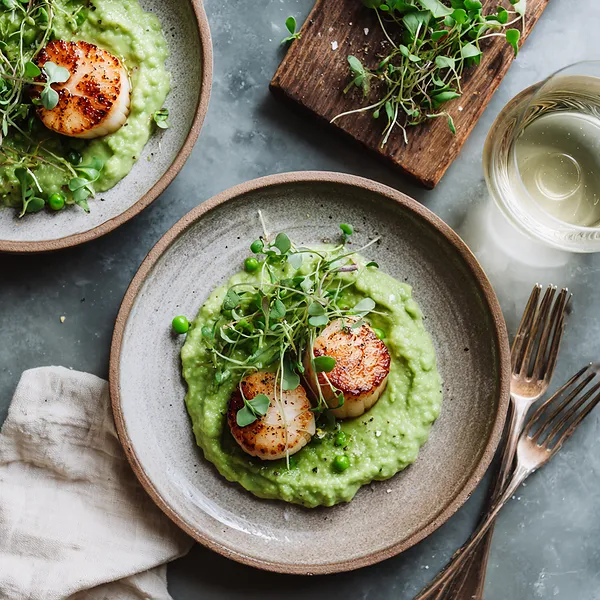
These seared scallops pair beautifully with a crisp glass of white wine — a Sauvignon Blanc or unoaked Chardonnay works wonderfully. For a fuller meal, serve alongside a light arugula salad dressed with lemon vinaigrette, or some crusty sourdough bread to scoop up every last bit of that pea puree. A side of roasted asparagus or broccolini also complements the dish without competing with its elegant flavors.
 pin it
Frequently Asked Questions
- → How do I get a perfect golden crust on scallops?
The most important factor is a completely dry scallop. Pat them thoroughly with paper towels before cooking, season just before they hit the pan, and use a very hot skillet with oil that is just beginning to smoke. Never move them until they release naturally from the pan.
- → Can I use frozen scallops for this recipe?
Yes, but thaw them overnight in the refrigerator and pat them very dry before cooking. Frozen scallops tend to release more water, so extra drying time is important to achieve a good sear.
- → Can I make the pea puree ahead of time?
Absolutely. The sweet pea puree can be prepared up to 2 days in advance and stored in an airtight container in the refrigerator. Reheat it gently in a saucepan with a small splash of broth or water to loosen it back to the right consistency.
- → What can I substitute for heavy cream in the puree?
You can use coconut cream for a dairy-free version, or simply use extra broth for a lighter option. The texture will be slightly less rich but still delicious and vibrant.
- → How do I know when scallops are cooked through?
A properly cooked scallop should feel firm but still have a very slight give when pressed. The center can remain just barely translucent — residual heat will finish it off. Overcooked scallops become rubbery quickly, so err on the side of slightly underdone.
- → Can I use frozen peas instead of fresh?
Frozen peas work perfectly in this recipe and are often sweeter and more vibrant in color than fresh peas because they are frozen immediately after harvest. No need to thaw — just add them directly to the warm broth.
Conclusion
Pan-Seared Scallops with Sweet Pea Puree is the kind of dish that feels indulgent but comes together in under 40 minutes. The contrast of the caramelized crust against that silky green puree is something truly special. Whether you're cooking for a date night or just treating yourself on a Tuesday, this recipe delivers every single time. Finish with good olive oil and fresh microgreens, and you've got a plate worth photographing.