
 pin it
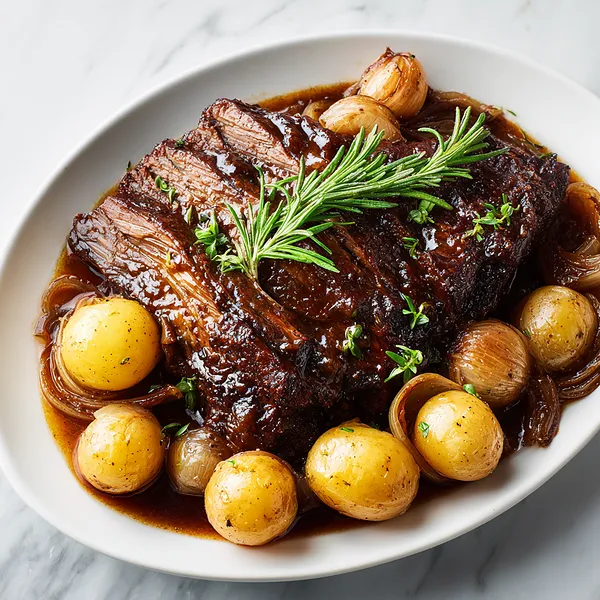
I still remember the first time I had a brisket like this — it was at a family gathering, served straight from a big roasting pan that had been sitting in the oven since morning. The smell hit me before I even walked into the kitchen. That deep, meaty, caramelized aroma that makes your stomach growl instantly. When it was sliced, the beef practically fell apart on the knife. It didn't need any effort. The sauce coating every piece was dark and glossy, a perfect blend of savory and slightly sweet with a hint of smoke. The potatoes had turned golden and absorbed all the cooking juices, making them taste like the best side dish you've ever had. I had two full plates that day and thought about it for weeks. When I finally recreated it at home, I understood exactly why it's the kind of food that brings people together. There's something primal and comforting about slow-cooked beef — it's patient cooking that rewards you with something genuinely spectacular.
Why I love this recipe
I love this brisket recipe because it does something magical with time. You do very little — season, sear, layer everything in — and hours later you're rewarded with something that tastes like it came from a high-end restaurant. The beef becomes impossibly tender, the sauce concentrates into this rich, sticky glaze, and the whole dish just comes together effortlessly. It's also incredibly versatile. Leftovers are even better the next day as the flavors deepen overnight. You can shred the beef and serve it in sandwiches, tacos, or over rice — so one cook session feeds you all week. But most of all, I love it because of what it does to a room. The smell alone brings people to the kitchen. It's the kind of meal that makes everyone slow down, sit together, and actually enjoy being at the table. That's what great food should do.
What You Need From Your Kitchen
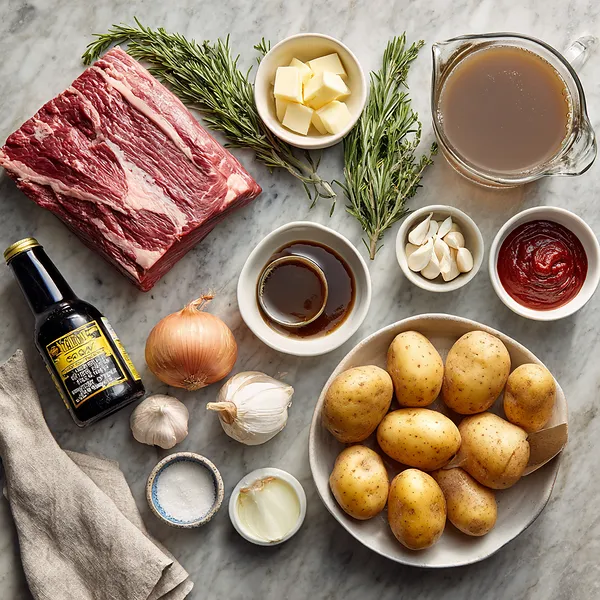
- Beef Brisket: The star of the dish — trim excess fat but leave a thin layer on top to baste the meat as it slow cooks, resulting in incredibly juicy and flavorful results.
- Baby Potatoes: Halved and added during the last 2 hours of cooking so they become tender and soak up the rich braising sauce without turning mushy.
- Yellow Onions: Sliced and caramelized first in the pan before slow cooking, they break down completely into a sweet, silky base that enriches the entire sauce.
- Beef Broth: Forms the body of the braising liquid — use a good quality broth for the best flavor since it reduces and concentrates throughout the cook.
- Worcestershire Sauce: Adds a deep, umami punch and a subtle tang that balances the richness of the beef and the sweetness of the brown sugar.
- Tomato Paste: Cooked briefly in the pan to caramelize before adding liquid — this deepens the color and adds a savory, slightly acidic complexity to the sauce.
- Fresh Rosemary: Tucked alongside the brisket in the slow cooker, it slowly perfumes the entire braise with its piney, aromatic oils.
Let's Make These Together
- Season and prep the brisket
- Pat the brisket dry and coat it generously with your spice rub — smoked paprika, salt, and black pepper. Don't rush this step. Press the seasoning into the meat so every bite has flavor built right in. Let it sit for 10-15 minutes while your pan heats up.
- Get that sear going
- Crank your skillet to high heat with olive oil until it's almost smoking. Drop the brisket fat-side down and don't touch it for 4-5 minutes. You want a deep mahogany crust forming. Flip and repeat. That crust is where most of the flavor comes from — it's worth the smoke.
- Build your braising sauce
- In the same pan, cook down your sliced onions until soft and golden. Add garlic, tomato paste, and brown sugar — cook until the paste darkens and smells incredible. Pour in the beef broth and Worcestershire sauce and scrape every last bit off the bottom of the pan. That's liquid gold.
- Into the slow cooker it goes
- Pour your braising liquid into the slow cooker, nestle the seared brisket on top fat-side up, and tuck in the rosemary. Put the lid on and set to LOW for 8-9 hours. Walk away. Your kitchen is going to smell unbelievable all day.
- Add potatoes halfway through
- About 2 hours before the brisket is done, carefully lift the lid and tuck the halved baby potatoes around the meat. Press them into the liquid so they can absorb all that flavor. Lid back on — almost there.
- Rest, slice, and serve
- Remove the brisket and let it rest 10 minutes before slicing against the grain or pulling apart with forks. Reduce the braising liquid in a saucepan for a glossy sauce if you like it thicker. Plate the meat over the potatoes and onions, pour that sauce all over, and finish with a fresh rosemary sprig. Absolute perfection.
 pin it
Switch Things Up
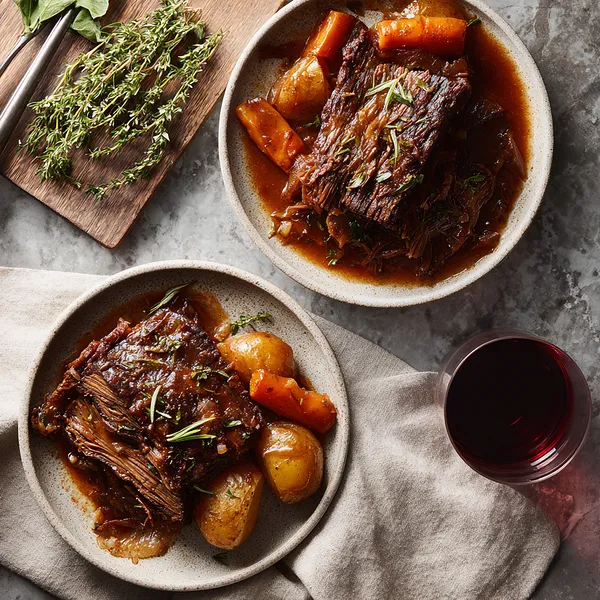
The first time I made this brisket, I added a splash of balsamic vinegar to the braising liquid — total game changer. The acidity balanced the richness of the beef beautifully and gave the sauce this incredible depth. Another time I swapped baby potatoes for sweet potatoes and it added this subtle sweetness that worked so well with the savory meat. You can also throw in some carrots and celery to bulk it up. If you want a smokier flavor, add a teaspoon of liquid smoke or use smoked beef broth. The beauty of this recipe is how forgiving and flexible it is — make it yours.
Perfect Pairings
This brisket pairs beautifully with creamy mashed potatoes if you want to skip the baby potatoes, or serve it over buttery egg noodles to soak up that gorgeous braising sauce. A simple green salad with a tangy vinaigrette cuts through the richness perfectly. For drinks, a bold red wine like Cabernet Sauvignon or a cold dark beer complements the deep savory flavors. Crusty sourdough bread on the side to mop up every last drop of that sauce is absolutely non-negotiable.
 pin it
Frequently Asked Questions
- → Can I make this brisket in the oven instead of a slow cooker?
Absolutely! Cover the brisket tightly with foil in a roasting pan and bake at 300°F (150°C) for about 4-5 hours until fork-tender. Check occasionally and add a splash of broth if the liquid reduces too much.
- → Do I have to sear the brisket before slow cooking?
Technically no, but strongly recommended. Searing creates a Maillard reaction on the surface of the beef that adds enormous depth and complexity to the final dish. Skipping it results in a paler, less flavorful brisket.
- → How do I know when the brisket is done?
The brisket is ready when a fork slides in with almost no resistance and the meat begins to pull apart at the edges. If it still feels firm or tough, give it another hour — it needs more time.
- → Can I use a different cut of beef?
Yes! Chuck roast is the best substitute — it has similar fat marbling and becomes equally tender during a long braise. Short ribs also work beautifully with this same braising method.
- → How should I store and reheat leftovers?
Store leftovers in an airtight container with some braising liquid to keep the meat moist. Refrigerate for up to 4 days or freeze for up to 3 months. Reheat gently on the stovetop over low heat, adding a splash of broth if needed.
- → Can I add vegetables other than potatoes?
Definitely! Carrots, parsnips, celery, and mushrooms all work wonderfully in this braise. Add firmer vegetables at the start and softer ones in the last 2 hours to prevent them from overcooking.
Conclusion
This Slow Cooked Beef Brisket is the kind of recipe that earns you a reputation. It's deeply flavorful, incredibly tender, and surprisingly hands-off. Whether you're feeding a crowd or meal prepping for the week, this dish delivers restaurant-quality results every single time. Make it once and it becomes a permanent part of your rotation.