
 pin it
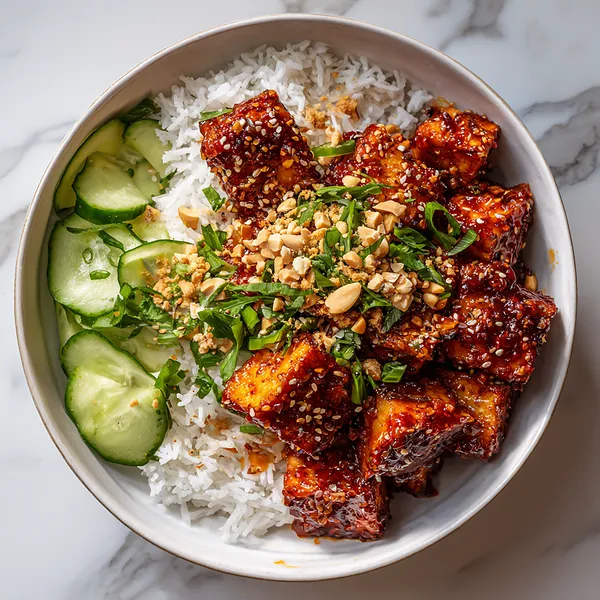
I first came across gochujang tofu at a small Korean-fusion spot that had a rotating weekly bowl menu. The moment I saw it — this glistening, deeply caramelized tofu sitting over rice with all those toppings — I knew I had to figure out how to make it at home. The sauce is the soul of this dish: gochujang brings a smoky, fermented heat, balanced by the sweetness of maple syrup and the tang of rice vinegar. The tofu is pressed until dry, coated in cornstarch, then pan-fried until each cube has a shatteringly crispy shell. When it hits that hot, glossy sauce in the pan, it gets coated in this sticky, lacquered layer that is absolutely irresistible. Topped with cool cucumber, crunchy peanuts, and fresh green onions — every bite has something different going on. It is one of those recipes that looks impressive but is honestly so approachable.
Why I love this recipe
I love this recipe because it delivers maximum flavor with minimal effort. Gochujang is one of those magical ingredients that does all the heavy lifting — it brings heat, umami, smokiness, and depth all in one spoonful. The tofu, when pressed and fried properly, has this incredible crispy texture that holds up to the sauce without going soggy. And the toppings — the cucumbers, peanuts, sesame, green onions — they are not just garnish, they are essential. Each one adds a different texture or temperature contrast that keeps every bite exciting. This is also a recipe I feel good about eating: it is plant-based, protein-rich, and made entirely from real ingredients. It has replaced delivery nights more times than I can count, and I never get tired of it.
What You Need From Your Kitchen
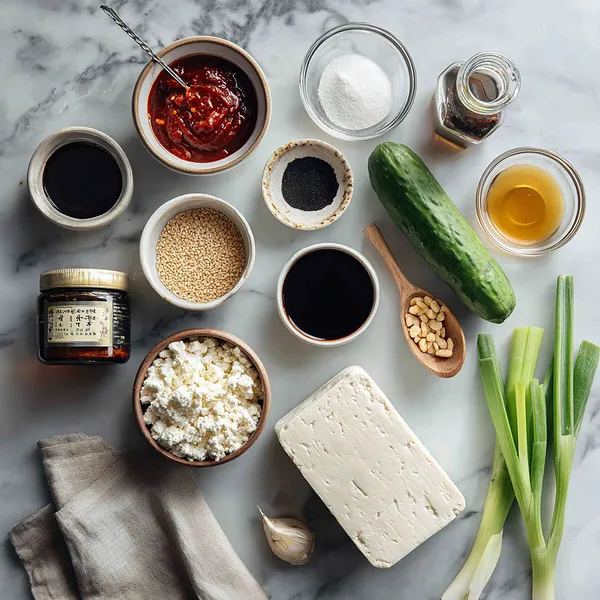
- Firm Tofu: Press out all excess moisture, then cube and coat in cornstarch before pan-frying until golden and crispy on all sides.
- Gochujang Paste: The bold, fermented Korean chili paste that forms the base of the sauce — smoky, spicy, and deeply savory.
- Soy Sauce: Adds saltiness and umami depth to the gochujang glaze.
- Sesame Oil: Stirred into the sauce for a rich, nutty aromatic finish.
- Garlic: Minced fresh garlic bloomed in the sauce adds a sharp, fragrant kick.
- Cucumber: Thinly sliced and served alongside the bowl to bring coolness and crunch that balances the heat.
- Crushed Peanuts: Scattered on top for a satisfying crunchy texture contrast against the sticky glaze.
- Jasmine Rice: The fluffy, fragrant base that soaks up every drop of that incredible sauce.
Let's Make These Together
- Press and cube the tofu
- Wrap your tofu block tightly in a clean towel and press it under something heavy for 10 minutes. Once pressed, cut it into roughly 1-inch cubes. This step is non-negotiable — removing moisture means you get crispy, golden tofu instead of soft, soggy pieces that won't hold the sauce.
- Coat in cornstarch
- Toss the tofu cubes in a bowl with cornstarch until lightly coated on all sides. The cornstarch creates a thin, crispy shell when it hits the hot oil and gives the glaze something to grip onto later.
- Pan-fry to golden perfection
- Heat neutral oil in a skillet over medium-high heat and lay the tofu in a single layer. Cook undisturbed for 3 to 4 minutes, then flip and repeat. You want each cube to be golden and a little crunchy before it meets the sauce.
- Whisk together the gochujang sauce
- In a small bowl, combine gochujang, soy sauce, sesame oil, rice vinegar, maple syrup, and minced garlic. Whisk until smooth and taste it — it should be spicy, sweet, tangy, and deeply savory all at once. Adjust if needed.
- Glaze the tofu in the pan
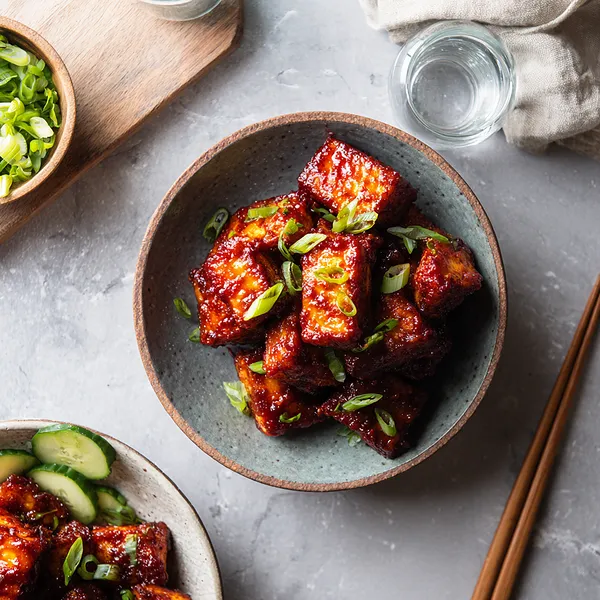
- Pour the sauce into the warm pan and let it bubble for a minute until slightly thickened. Add the crispy tofu back in and toss everything together so each piece is coated in that sticky, lacquered glaze. Give it one more minute over heat.
- Build your bowl and serve
- Scoop jasmine rice into bowls, pile the gochujang tofu on top, tuck in cucumber slices, and finish with green onions, crushed peanuts, and sesame seeds. Serve right away while the tofu is still hot and crispy.
 pin it
Switch Things Up
I started making this on a whim one evening when I had a block of tofu sitting in the fridge and a jar of gochujang I had been meaning to use. I pan-fried the tofu extra crispy, made a quick sauce, and tossed everything together. The result was so good I ended up making it three times that same week. Now I always keep gochujang stocked — it is honestly one of the most versatile and exciting ingredients in my pantry.
Perfect Pairings
This Sticky Gochujang Tofu pairs beautifully with steamed jasmine or sushi rice to soak up all that glorious sauce. Serve alongside a simple cucumber salad dressed with sesame and rice vinegar, or add a bowl of miso soup for a full Korean-inspired spread. For drinks, an ice cold barley tea or a light lager complements the spice perfectly.
 pin it
Frequently Asked Questions
- → Can I bake the tofu instead of frying it?
Yes! Bake cornstarch-coated tofu at 400°F (200°C) for 25 to 30 minutes, flipping halfway, until golden and crispy. Then toss in the sauce as directed. It takes longer but is a great lower-oil option.
- → How spicy is gochujang tofu?
It has a medium heat level that builds gradually. The sweetness from maple syrup helps balance the spice. If you are sensitive to heat, start with 2 tablespoons of gochujang instead of 3 and taste the sauce before adding more.
- → Can I make this recipe gluten-free?
Absolutely — just swap regular soy sauce for tamari or a certified gluten-free soy sauce. Everything else in the recipe is naturally gluten-free.
- → What can I substitute for gochujang?
There is no perfect substitute, but a mix of sriracha with a little miso paste and a touch of smoked paprika can approximate the flavor profile. Gochujang is widely available online and in Asian grocery stores though, so it is worth seeking out.
- → How do I store and reheat leftovers?
Store tofu and rice separately in airtight containers in the fridge for up to 3 days. Reheat the tofu in a dry non-stick pan over medium heat to bring back the crispiness — the microwave will make it soft.
- → Is this recipe vegan?
Yes — as long as you use maple syrup instead of honey, this recipe is fully vegan and plant-based.
Conclusion
Sticky Gochujang Tofu is one of those recipes that genuinely surprises people — the depth of flavor, the crunch, the heat, the sweetness all in one bowl. It is weeknight friendly, budget conscious, and wildly satisfying. Whether you are already a tofu lover or a skeptic, this dish might just become your new obsession.