
 pin it
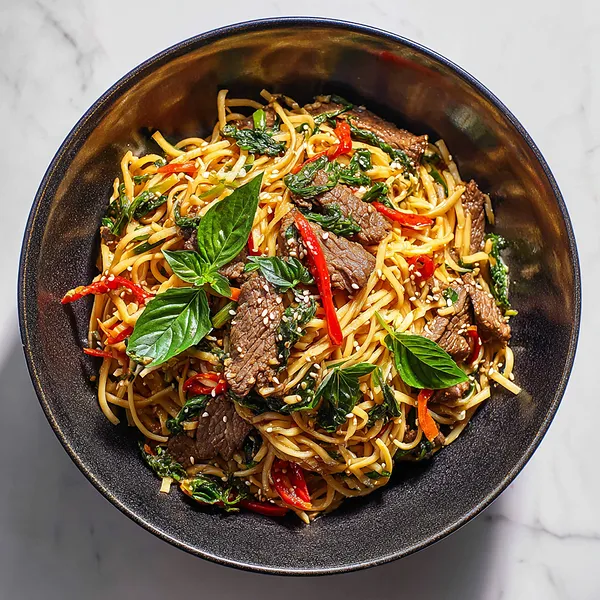
I first encountered Thai basil beef at a tiny street stall in Bangkok — the cook worked over a furiously hot wok, the flames licking up the sides, and the smell of garlic, basil, and soy hitting the air all at once. I stood there, bowl in hand, completely mesmerized. Back home I spent weeks trying to recreate that experience, tweaking the sauce ratios, experimenting with noodle types, learning to get the wok hot enough. What you see in this image — those glistening golden noodles tangled with caramelized beef, blanketed in fresh green basil and scattered with crimson chili slices — that's the result of that obsession. Every bite carries that same punch of savory, sweet, and spicy that stopped me in my tracks on that Bangkok street. It's become the recipe I turn to when I need something fast but deeply satisfying, and the one I make when I want to impress without spending hours in the kitchen.
Why I love this recipe
I love this recipe because it delivers restaurant-level flavor with almost zero effort. The sauce comes together in seconds, the beef cooks in minutes, and the fresh Thai basil does all the heavy lifting when it hits that hot wok and releases its incredible fragrance. There's something almost magical about the way the ingredients transform so quickly — raw to extraordinary in under half an hour. I also love how forgiving it is; you can adjust the heat, swap the protein, change the noodles, and it always works. But most of all, I love how it makes me feel like a proper cook every single time I make it.
What You Need From Your Kitchen
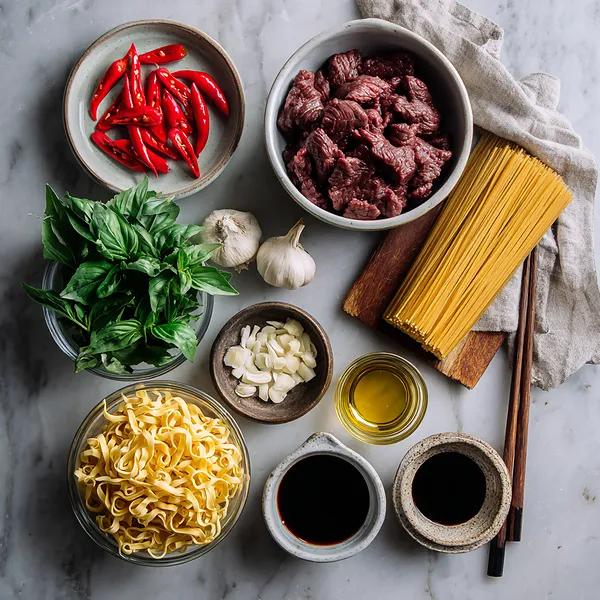
- Beef Sirloin: Slice paper-thin against the grain for maximum tenderness and quick searing.
- Egg Noodles: Cook until just al dente, then cool and oil them so they don't clump before hitting the wok.
- Thai Basil: Add at the very end of cooking so it wilts beautifully without losing its aromatic punch.
- Red Chilies: Slice thin for even heat distribution throughout the dish; adjust quantity to taste.
- Oyster Sauce: The backbone of the sauce — it adds deep umami sweetness that ties everything together.
- Fish Sauce: Adds a layer of savory saltiness that elevates the entire sauce beyond soy alone.
Let's Make These Together
- Cook and prep the noodles
- Boil egg noodles until al dente, drain, rinse under cold water, and toss with a small drizzle of sesame oil to keep them separated. Set aside and get everything else ready before you heat that wok.
- Marinate the beef quickly
- Toss your sliced beef with cornstarch, a splash of soy sauce, and a pinch of sugar. Just 5 minutes is enough for the cornstarch to work its magic and ensure a gorgeous golden sear.
- Mix your sauce in a bowl
- Combine oyster sauce, soy sauce, fish sauce, and sugar in a small bowl and stir until smooth. Having this ready before cooking starts is non-negotiable — things move fast once the wok is hot.
- Sear the beef hard and fast
- Get your wok screaming hot, add oil, and lay the beef in without touching it for a full minute. That caramelized crust is where all the flavor lives. Flip, cook one more minute, then remove and set aside.
- Bloom garlic and chilies
- In the same wok, fry the minced garlic and chili slices for just 30 seconds. Watch them closely — you want golden and fragrant, not burnt.
- Bring it all together
- Return the noodles and beef to the wok, pour in the sauce, and toss everything together over maximum heat for 2 minutes. Throw in the Thai basil at the very end and toss once more until just wilted. Plate immediately and devour.
 pin it
Switch Things Up
One night I swapped the egg noodles for glass noodles and added a handful of bean sprouts right at the end — the texture contrast was incredible. I've also tried it with ground beef when I had no time to slice, and honestly it worked beautifully. Sometimes I add a spoonful of chili crisp into the sauce for extra depth. This recipe is endlessly flexible and always delivers.
Perfect Pairings
These noodles pair perfectly with a simple cucumber salad dressed in rice vinegar and sesame oil to cool things down. A side of steamed jasmine rice soaks up every last drop of the sauce. For drinks, an ice-cold Thai iced tea or a light lager balances the heat and richness of the beef beautifully.
 pin it
Frequently Asked Questions
- → Can I use a different protein instead of beef?
Absolutely! Chicken thighs, pork strips, or even firm tofu work wonderfully in this dish. Just adjust cooking time accordingly — chicken and pork need a minute or two longer, while tofu should be pressed and dried before hitting the wok.
- → What if I can't find Thai basil?
Italian basil can work in a pinch, but the flavor profile will be noticeably different — milder and less peppery. If you can, look for Thai basil at Asian grocery stores; it truly makes a difference in this recipe.
- → Can I make this less spicy?
Yes! Simply reduce the number of chilies or remove the seeds before slicing to lower the heat level significantly. You can even swap fresh chilies for a small amount of mild red bell pepper to keep the color without the burn.
- → Can I prep this ahead of time?
You can marinate the beef and mix the sauce up to a day ahead, and cook the noodles a few hours before. However, the stir-fry itself is best done right before serving since noodles can become soft and the beef can toughen if reheated.
- → What kind of wok is best for this recipe?
A carbon steel wok is ideal because it heats up fast, retains heat well, and develops a natural non-stick seasoning over time. If you don't have one, a large stainless steel or cast iron skillet over maximum heat will still give great results.
- → Can I use rice noodles instead of egg noodles?
Yes, rice noodles are a great gluten-free alternative. Use flat rice noodles soaked in warm water per package directions, and add them to the wok the same way. They absorb the sauce beautifully and give a different but equally delicious texture.
Conclusion
Thai Basil Beef Noodles are proof that the boldest flavors come from the simplest techniques. A screaming hot wok, quality beef, fragrant basil, and the right balance of sauces — that's truly all you need. This dish belongs in your regular weeknight rotation, and once you've made it, you'll understand exactly why.