
 pin it
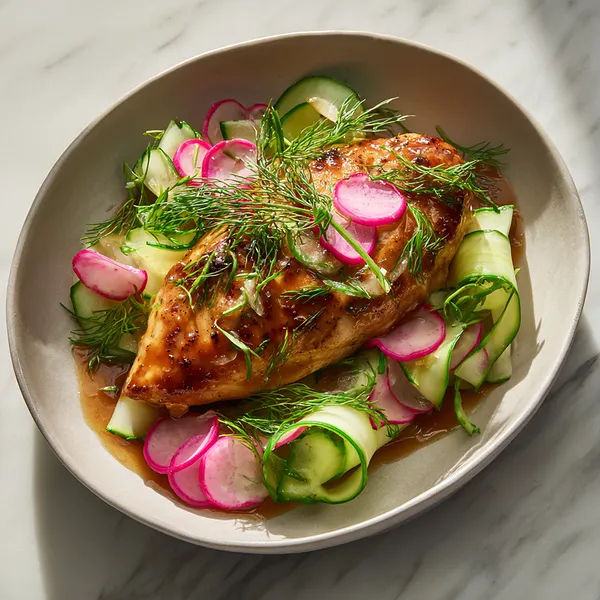
I first encountered apple cider chicken at a small farm-to-table restaurant in Vermont during peak fall foliage season. The combination seemed so simple – chicken and cider – yet the flavors were incredibly complex. I became obsessed with recreating it at home. After several attempts, I discovered the secret was reducing the cider to concentrate its flavors and adding just enough honey to help it caramelize without burning. The chicken needs to be cooked skin-side down first (or in this case, the presentation side) to get that beautiful crust. What really makes this recipe sing, though, is the slaw. I added it because I felt the dish needed something bright and fresh to cut through the richness. The combination of crunchy vegetables, tangy pickles, and fresh herbs creates this perfect contrast. The dill especially brings everything together with its fresh, slightly anise-like flavor. Every time I make this, I'm transported back to that Vermont restaurant, surrounded by fall colors and crisp air. It's become my signature dish for autumn gatherings.
Why I love this recipe
What I love most about this recipe is how it captures the essence of fall in a single dish. The apple cider glaze brings all those cozy autumn feelings – apple orchards, harvest time, cool evenings. But it's not heavy or overwhelming. The slaw keeps everything balanced and fresh, preventing it from being just another rich, sweet chicken dish. I also appreciate how forgiving this recipe is. If your glaze gets a bit too thick, just add a splash of cider. If it's too thin, let it reduce a bit more. The chicken is hard to overcook because the glaze keeps it moist. And the slaw? You can make it your own with whatever crunchy vegetables you have on hand. I love that it looks impressive – those colors, that glistening glaze, the fresh herbs – but it's actually quite simple to execute. It's the kind of recipe that makes you feel like a chef even on a Tuesday night. Plus, it's naturally gluten-free and dairy-free, so I can serve it to almost anyone without modifications. That's the beauty of good, simple ingredients done well.
What You Need From Your Kitchen
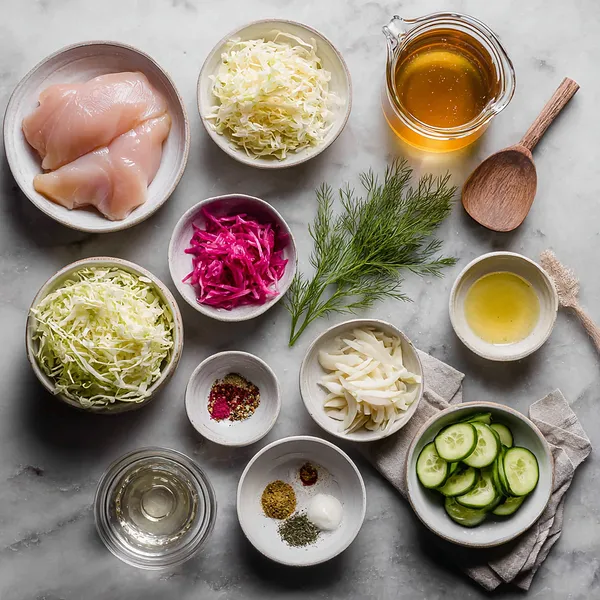
- Apple Cider: Use fresh, unfiltered apple cider for the best flavor and reduce it until thick and syrupy
- Chicken Breasts: Pat completely dry before seasoning to ensure proper browning and caramelization
- Honey: Helps the glaze caramelize and adds sweetness to balance the tartness of the cider
- Cabbage: Shred finely for the slaw to create a crisp, tender base
- Cucumber: Slice into ribbons using a vegetable peeler for an elegant presentation
- Fresh Dill: Chop just before using to maintain maximum flavor and aroma
- Pickled Radish: Adds tangy crunch and beautiful pink color to the slaw
Let's Make These Together
- Season the Chicken
- Start by patting your chicken breasts completely dry – this is crucial for getting that beautiful golden crust. Season generously on both sides with salt, pepper, and smoked paprika. The paprika adds a subtle smokiness that complements the sweet cider glaze beautifully. Let the chicken rest at room temperature while you prepare the glaze, which helps it cook more evenly.
- Create the Glaze
- In a small saucepan, combine the apple cider, honey, apple cider vinegar, and minced garlic. Bring this mixture to a boil, then reduce the heat and let it simmer. Watch as it transforms from thin liquid into a glossy, thick glaze. This reduction process is where the magic happens – the flavors concentrate and intensify, creating layers of sweet and tart complexity. The glaze should coat the back of a spoon when it's ready.
- Sear the Chicken
- Heat your skillet until it's nice and hot, add the olive oil, and carefully place your seasoned chicken breasts in the pan. Resist the urge to move them around – let them develop that gorgeous golden-brown crust. After 6-7 minutes, flip them over and continue cooking. In the final minutes, generously brush on your reduced apple cider glaze and watch it caramelize into a sticky, lacquered coating. Use a meat thermometer to ensure they reach 165°F for perfectly cooked, juicy chicken.
- Assemble the Slaw
- While the chicken is cooking, toss together your shredded cabbage, cucumber ribbons, pickled radishes, and fresh dill. The slaw should be bright, crisp, and colorful – a perfect contrast to the rich, caramelized chicken. Keep it simple; the vegetables shine on their own with just the pickling liquid from the radishes for flavor.
- Plate with Style
- Transfer your beautifully glazed chicken to serving plates, give it one final brush of glaze for extra shine, and crown it with a generous heap of the autumn slaw. The contrast of the warm, sticky chicken with the cool, crunchy slaw is absolutely perfect. Finish with a sprinkle of fresh dill and serve immediately.
 pin it
Switch Things Up
The first time I made this recipe, I was actually trying to use up some apple cider I had bought for a fall party. I thought, why not reduce it down and use it as a glaze? The result was even better than I imagined. The chicken got this gorgeous mahogany color, and the kitchen smelled like an autumn orchard. I didn't have all the slaw ingredients on hand, so I improvised with what was in my fridge – some cabbage, a cucumber, and fresh dill from my herb garden. The pickled radishes were a last-minute addition from a jar I found in the back of the fridge. That combination of warm, sticky chicken and cool, tangy slaw was a revelation. Now it's become my go-to recipe when I want something that feels special but doesn't require running to the store. My family requests it constantly, especially when the weather starts to cool down.
Perfect Pairings
This chicken pairs beautifully with roasted sweet potatoes or butternut squash to embrace those fall flavors fully. A simple wild rice pilaf adds a nutty earthiness that complements the apple cider glaze perfectly. If you want to keep it lighter, serve it over a bed of mixed greens dressed with a light vinaigrette. For beverages, a crisp hard cider or a Riesling would echo the apple notes, while a hoppy IPA provides a nice contrast. Don't forget crusty bread to soak up that delicious glaze – it would be a crime to let any of it go to waste!
 pin it
Frequently Asked Questions
- → Can I use chicken thighs instead of breasts?
Absolutely! Chicken thighs work wonderfully with this recipe. They'll stay even more moist and flavorful. Just adjust cooking time to about 8-10 minutes per side and ensure they reach an internal temperature of 165°F.
- → How do I know when the glaze is reduced enough?
The glaze is ready when it's reduced by half and coats the back of a spoon. It should be thick enough to cling to the chicken but not so thick that it's syrupy. If it gets too thick, just add a splash more cider.
- → Can I make the glaze ahead of time?
Yes! The apple cider glaze can be made up to 3 days in advance and stored in the refrigerator. Just reheat it gently before using, adding a bit of water or cider if it's too thick.
- → What if I don't have fresh dill?
Fresh parsley or cilantro would work well as substitutes. You could also use dried dill, but reduce the amount to about 1 tablespoon since dried herbs are more concentrated.
- → Is this recipe suitable for meal prep?
Yes, but with a caveat. The chicken reheats beautifully and can be stored for up to 4 days. However, keep the slaw separate and assemble just before serving to maintain its crisp texture. The slaw will get soggy if mixed with the chicken for storage.
- → Can I use apple juice instead of apple cider?
While you can substitute apple juice in a pinch, fresh apple cider has a much richer, more complex flavor that really makes this dish special. The cider's natural depth intensifies when reduced, creating a superior glaze.
Conclusion
This Sticky Apple Cider Chicken with Crisp Autumn Slaw is the perfect bridge between summer freshness and fall comfort. The sweet-tangy glaze creates an irresistible caramelized crust on the chicken, while the bright, crunchy slaw keeps everything light and balanced. It's a dish that works beautifully for weeknight dinners or weekend entertaining. The apple cider reduction intensifies the flavors, creating layers of complexity that taste like you spent hours in the kitchen. Best of all, it's naturally gluten-free and dairy-free, making it accessible for various dietary needs. Serve it fresh and watch it disappear!