
 pin it
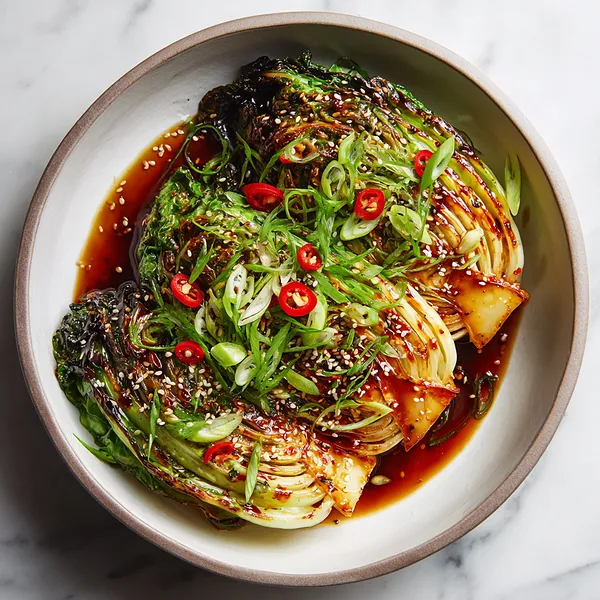
I had never thought much about cabbage as anything beyond a coleslaw ingredient or a soup filler — it was always the background character, never the lead. That changed completely the first time I ordered a roasted cabbage dish at a small Japanese-inspired restaurant tucked into a side street. It arrived looking almost theatrical: a single dark wedge, deeply caramelized, shining under a lacquered soy glaze with scattered sesame and bright red chilies on top. The first bite stopped me mid-conversation. The outer leaves were slightly crisp and smoky, the inner layers tender and sweet, and the glaze tied everything together with this deep, complex umami richness that I couldn't quite believe came from a cabbage. I went home that night and spent the next few evenings reverse-engineering it in my own kitchen. After a few rounds of testing — adjusting the glaze ratio, getting the char just right, finding the balance between sweet honey and sharp soy — I landed on this version. It's now one of my most-made recipes, the one I pull out when I want to impress someone without spending hours cooking. It's honest, bold food that happens to be vegetable-forward.
Why I love this recipe
I love this recipe because it does something that very few dishes manage to do: it makes you rethink an ingredient you thought you already knew. Cabbage is cheap, accessible, and almost always overlooked — and this recipe turns it into something genuinely exciting. The contrast of textures gets me every time: those slightly crispy charred outer leaves against the soft, almost silky interior layers, all coated in a glaze that's sticky and savory and just a little sweet. It's also incredibly forgiving and fast. You don't need special equipment or hard-to-find ingredients — a hot pan, a basic glaze, and about 30 minutes is all it takes. I love how it looks on the plate too; it photographs beautifully and always gets reactions from anyone I serve it to. Most of all, I love that it's plant-based but never feels like a compromise. It's satisfying in the way that great comfort food is satisfying — deeply flavored, a little indulgent, and completely worth making again the next day.
What You Need From Your Kitchen
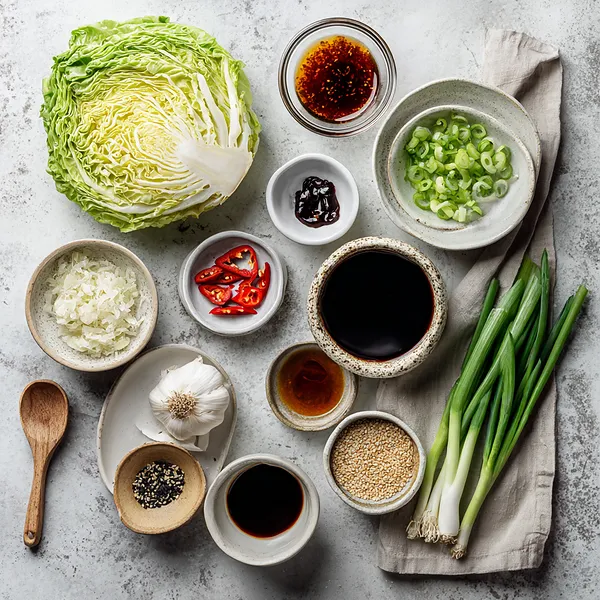
- Green Cabbage: Cut into thick wedges keeping the core intact, patted dry for maximum char
- Soy Sauce: Forms the savory, umami base of the sticky glaze
- Honey or Maple Syrup: Adds sweetness and helps the glaze caramelize and cling
- Sesame Oil: Adds a nutty, toasty depth to the glaze
- Fresh Garlic: Minced finely and whisked into the glaze for bold aromatic flavor
- Red Chili: Sliced into rounds for a fresh, spicy garnish on top
- Green Onions: Sliced thin and scattered over the finished dish for color and freshness
- Sesame Seeds: Toasted and sprinkled on top for crunch and visual appeal
Let's Make These Together
- Cut and dry the cabbage wedges
- Remove outer leaves and cut the cabbage through the core into thick wedges — about 3–4 per half head. The core must stay intact or your wedge will fall apart in the pan. Pat each wedge thoroughly dry with paper towels; surface moisture is the enemy of a good char.
- Whisk together the sticky soy glaze
- In a small bowl combine soy sauce, honey, sesame oil, minced garlic, rice vinegar, and chili flakes. Whisk until uniform and glossy. This takes about 30 seconds. Taste it — it should be bold, slightly sweet, garlicky, and have a little heat. Adjust to your preference now before it goes on the heat.
- Char the cabbage in a screaming hot pan
- Heat olive oil in your cast iron over the highest flame until it's just starting to smoke. Lay the wedges flat-side down and do not touch them. Let them go for a full 3–4 minutes until you see a deep brown-black crust forming at the base. Flip to the second flat side and repeat. This is where the magic happens.
- Pour on the glaze and let it bubble
- Turn the heat down to medium and pour your prepared soy glaze directly over the wedges. It'll sizzle loudly and immediately start caramelizing. Spoon it back over the tops continuously for about 2 minutes as it reduces and gets sticky. Every layer of cabbage should be coated.
- Finish roasting until tender through the core
- Slide the whole pan into your oven preheated to 200°C (400°F) and roast for 8–10 minutes. This step ensures the interior of the cabbage becomes fully tender and sweet while the outside deepens even further. If you're skillet-only, cover with a lid on low for 6–8 minutes instead.
- Garnish generously and serve immediately
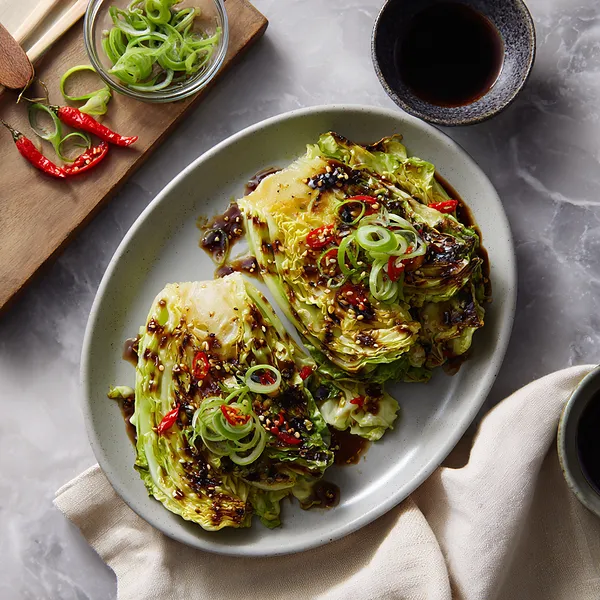
- Pull the pan out and plate the wedges right away. Drizzle the remaining pan glaze over the top, then load on the green onions, red chili rounds, and sesame seeds. Serve hot — this dish loses its magic as it cools, so get it to the table fast.
 pin it
Switch Things Up
I remember the first time I made this — I was skeptical about cabbage being the main event, honestly. I had half a head sitting in the fridge and threw it in a screaming hot pan almost on a whim. When it started charring and the kitchen filled with that nutty, caramelized smell, I knew something special was happening. I whisked together the soy glaze and poured it over — it sizzled and bubbled and reduced into this glossy, sticky coating that clung to every leaf. I piled on the green onions and chilies, scattered sesame seeds everywhere, and stood over the plate eating straight from it before it even reached the table. Now I make double the glaze every single time because I want it on everything.
Perfect Pairings
This charred cabbage pairs beautifully with steamed jasmine rice or sticky short-grain rice to soak up all that incredible glaze. Serve it alongside miso soup, edamame, or a cold sesame noodle salad for a complete Asian-inspired spread. It also works wonderfully next to grilled tofu, crispy tempeh, or pan-seared salmon if you eat fish. For a heartier meal, tuck it into a rice bowl with pickled cucumbers and a soft-boiled egg. A cold glass of iced green tea or a light lager beer rounds out the experience perfectly.
 pin it
Frequently Asked Questions
- → Can I make this without an oven?
Absolutely. After applying the glaze in the pan, just reduce the heat to low and cover with a tight lid. Let the cabbage steam-cook for about 6–8 minutes until the core is tender. It won't have the same deep roasted quality, but it will still be delicious and sticky.
- → What type of cabbage works best for this recipe?
Green cabbage is the classic choice — it chars beautifully and holds its structure well. Napa cabbage also works but is more delicate and will cook faster. Red cabbage gives a striking color but has a slightly tougher texture that takes longer to become tender.
- → Is this recipe gluten-free?
Standard soy sauce contains wheat and is not gluten-free. To make this recipe gluten-free, simply substitute tamari (a Japanese soy sauce made without wheat) or coconut aminos for a slightly sweeter, lighter flavor profile.
- → Can I make the glaze ahead of time?
Yes — the soy glaze can be made up to 5 days in advance and stored in a sealed jar in the refrigerator. Give it a stir or quick whisk before using as the garlic may settle. You can also gently warm it before pouring over the hot cabbage.
- → How do I store and reheat leftovers?
Store leftover cabbage wedges in an airtight container in the fridge for up to 3 days. Reheat in a hot skillet over medium heat with a small splash of water or extra soy sauce to re-loosen the glaze. Avoid microwaving if possible as it makes the cabbage watery and limp.
- → Can I grill this instead of pan-searing?
Yes, and it's incredible on the grill! Brush the wedges with olive oil and grill over high heat for 3–4 minutes per flat side. Then brush on the glaze and move to indirect heat for a few minutes to let it set. The smoky char from real flames takes this to another level.
Conclusion
This Charred Cabbage with Sticky Soy Glaze is the kind of recipe that quietly steals the show at any table. It transforms a humble, affordable vegetable into something deeply savory, slightly sweet, and absolutely crave-worthy. Whether you serve it as a stunning side or the star of a plant-based meal, it delivers bold flavor with minimal effort. Once you try it, cabbage will never feel like a boring ingredient again.