
 pin it
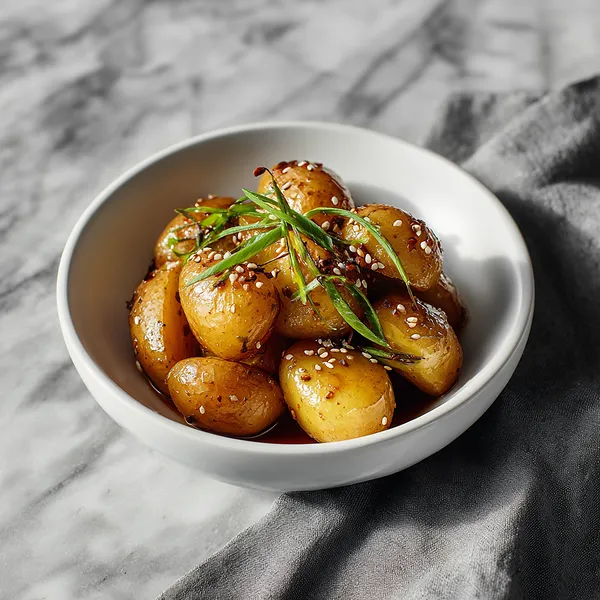
I first encountered Gamja Jorim at a small Korean restaurant tucked away in a busy neighborhood. It arrived as one of many banchan, those delightful little side dishes that make Korean dining so special. Among all the colorful options on the table, these glossy little potatoes caught my eye immediately. They were glistening under the light, coated in what looked like liquid gold. One bite and I was hooked – the texture was perfect, tender but not mushy, and the flavor was this incredible balance of sweet, salty, and savory with a hint of nuttiness from the sesame. I loved how each potato had soaked up the sauce, becoming flavor bombs in their own right. The dish seemed deceptively simple, yet it had such depth. I knew I had to learn how to make it at home. After some research and experimentation, I discovered that the secret lies in the braising technique and letting the sauce reduce to that perfect syrupy consistency. Now it's become one of my go-to side dishes whenever I want to add something special to dinner without spending hours in the kitchen.
Why I love this recipe
What I love most about this recipe is how it takes humble potatoes and elevates them into something truly crave-worthy. There's something deeply satisfying about the transformation that happens in the pot – watching the potatoes go from plain to gloriously glazed. The recipe is also wonderfully forgiving; it's hard to mess up, and even if the sauce reduces a bit too much or not quite enough, it still tastes amazing. I appreciate that it uses ingredients I usually have on hand, yet the result feels special enough for company. The texture contrast is perfection – tender creamy potatoes with that slightly sticky, caramelized exterior, topped with crunchy sesame seeds. It's also incredibly versatile; I've served it at casual weeknight dinners and fancier gatherings with equal success. Perhaps most importantly, it's introduced me to a whole world of Korean flavors and cooking techniques. Every time I make it, I'm reminded that the best recipes don't need to be complicated – they just need good ingredients and a little patience.
What You Need From Your Kitchen
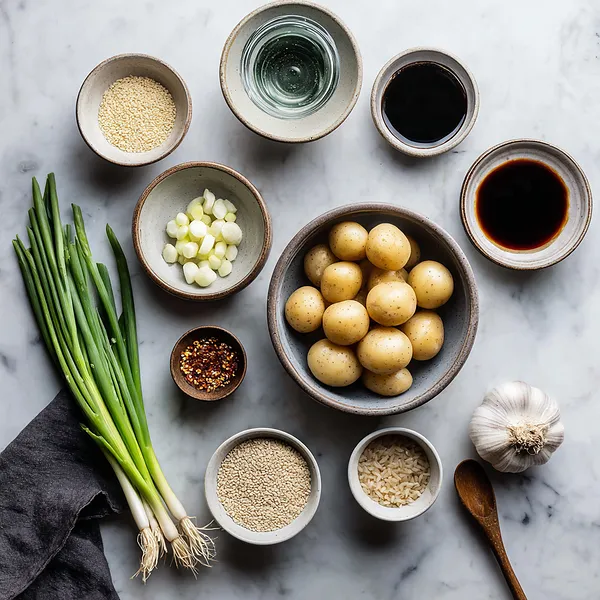
- Baby Potatoes: Wash thoroughly and cut larger ones in half for uniform size
- Soy Sauce: Use as the base for the savory braising liquid
- Rice Syrup: Provides authentic sweetness and helps create the glossy glaze
- Sesame Oil: Add for nutty aroma and authentic Korean flavor
- Garlic: Mince finely and add to the sauce for aromatic depth
- Sesame Seeds: Toast lightly and use as garnish for texture and flavor
- Scallions: Chop and sprinkle on top for fresh contrast and color
Let's Make These Together
- Prep Your Potatoes Right
- Start by giving your baby potatoes a good wash under cold water to remove any dirt. The key here is uniformity – cut any larger potatoes in half so everything cooks at the same rate. This ensures you won't have some potatoes falling apart while others are still firm. Pat them dry with a towel before adding to the pan.
- Build Your Flavor Base
- In your pan, combine the water, soy sauce, rice syrup, minced garlic, and sesame oil. Take a moment to really mix this well – you want all those flavors to meld together from the start. The aroma that rises when you mix the sesame oil with the other ingredients is just the beginning of something delicious.
- The Braising Process
- Add your potatoes to the sauce and bring everything to a boil over medium-high heat. Once you see those bubbles, reduce the heat and cover the pan. This gentle simmering is crucial – it allows the potatoes to become tender while slowly absorbing all that wonderful sauce. Stir occasionally to ensure even cooking and prevent sticking.
- Create the Glaze
- Here's where the magic happens. Remove the lid and turn up the heat. As the liquid reduces, you'll see the sauce transform into a thick, glossy glaze. Keep stirring during this phase – you want to coat every potato evenly. The potatoes will start to look shiny and caramelized. This takes patience, but watching the transformation is incredibly satisfying.
- Finish with Flair
- Transfer your beautifully glazed potatoes to a serving dish. While they're still warm, shower them with toasted sesame seeds and freshly chopped scallions. The sesame seeds add a delightful crunch, while the scallions provide a fresh, sharp contrast to the sweet-savory potatoes. Stand back and admire your work before diving in.
 pin it
Switch Things Up
The first time I made Gamja Jorim, I was skeptical about how something so simple could be so good. I'd seen these shiny potatoes at Korean restaurants and always wondered about that incredible glaze. When I finally tried making them at home, I couldn't believe how easy it was. I remember standing over the pot, watching the sauce reduce and coat each potato in that beautiful glossy finish. The smell of garlic, soy, and sesame oil filling my kitchen was intoxicating. I ended up eating half the batch straight from the pan before dinner was even ready. Now I make a double batch every time because they never last long. My family fights over the last few potatoes, and I've caught people sneaking cold ones straight from the fridge the next day. They're just that good.
Perfect Pairings
Gamja Jorim is incredibly versatile and pairs wonderfully with so many dishes. Serve it alongside Korean BBQ, grilled meats, or bulgogi for an authentic experience. It's also fantastic with rice bowls, fried rice, or as part of a banchan spread with kimchi and seasoned vegetables. For a complete meal, pair it with steamed white rice, a protein like tofu or chicken, and a fresh cucumber salad. The sweet-savory flavor also complements Western dishes like roasted chicken or pork chops surprisingly well.
 pin it
Frequently Asked Questions
- → Can I use regular potatoes instead of baby potatoes?
Yes, you can use regular potatoes, but you'll need to cut them into 1-inch cubes for even cooking. Baby potatoes are preferred because they have a creamier texture and hold their shape better during braising, but larger potatoes cut small will still work well.
- → How do I know when the glaze is reduced enough?
The sauce is ready when it coats the back of a spoon and has a syrupy consistency. You should see the potatoes glistening with a thick glaze rather than sitting in liquid. If you tilt the pan, very little liquid should pool at the bottom.
- → Can I make this recipe ahead of time?
Absolutely! These potatoes actually taste better the next day as the flavors continue to develop. Store them in an airtight container in the refrigerator for up to 5 days. Reheat gently in a pan over low heat or microwave until warmed through.
- → What can I substitute for rice syrup?
Honey, maple syrup, or corn syrup all work as substitutes for rice syrup. Each will provide sweetness, though the flavor profile will be slightly different. Rice syrup gives the most authentic Korean taste and creates the best glossy finish.
- → My sauce is too salty, what should I do?
If your sauce tastes too salty, add a bit more water and an extra tablespoon of rice syrup or honey to balance the saltiness. Remember that the sauce will concentrate as it reduces, so it should taste slightly less salty than you want the final dish to be.
- → Can I make this recipe vegan?
Yes! Simply use maple syrup or agave instead of honey if your recipe calls for it. Make sure your soy sauce is vegan-friendly (most are, but some specialty varieties contain fish). The rest of the ingredients are naturally plant-based.
Conclusion
These Korean braised potatoes are the perfect example of how simple ingredients can create something truly special. The combination of salty soy sauce, sweet rice syrup, and nutty sesame oil transforms ordinary potatoes into an addictive side dish that pairs beautifully with any meal. Whether you're serving them alongside grilled meats, rice bowls, or enjoying them on their own, these glossy, caramelized potatoes will disappear faster than you can make them. The recipe is forgiving, easy to double, and keeps well for meal prep throughout the week.