
 pin it
I first discovered Kashmiri Pink Tea during a visit to a friend's home, where her grandmother served it in delicate china cups with an almost ceremonial grace. The moment I saw that pale pink color, I was mesmerized – it looked more like a fancy latte than traditional tea. When I tasted it, the salted, creamy profile completely surprised me. It wasn't sweet like chai, but savory and comforting in a way I'd never experienced with tea before. The grandmother explained that this tea, called Noon Chai (literally 'salt tea'), has been made in Kashmir for centuries, especially during cold winters and special gatherings. She showed me how the baking soda and vigorous whisking create both the pink color and the frothy texture. The cardamom adds warmth, while the pistachios and almonds provide texture and richness. I went home determined to recreate it, and after a few attempts (and some not-so-pink results), I finally mastered the technique. Now, this recipe reminds me of that warm kitchen and the tradition of sharing something truly special.
Why I love this recipe
What I love most about Kashmiri Pink Tea is how it challenges everything you think you know about tea. The fact that it's salted instead of sweetened makes it unique and memorable – it's a conversation starter every single time I serve it. I love the ritual of making it, from steeping the tea leaves to that satisfying moment when the color turns from green to pink after adding the baking soda. There's something meditative about whisking it to create that signature froth. The aroma is incredible too – the cardamom fills the entire kitchen with warmth. I also appreciate that it's not overly heavy despite being made with whole milk; the salt balances everything perfectly. This tea makes me feel connected to a rich cultural tradition, and sharing it with friends feels like sharing a piece of history. Plus, it's absolutely beautiful to photograph and serve – that pink hue never fails to impress. It's become my signature drink when hosting.
What You Need From Your Kitchen
- Kashmiri Green Tea Leaves: Use authentic Kashmiri tea or gunpowder green tea for the proper base and color development
- Baking Soda: Essential for the chemical reaction that creates the signature pink color when aerated
- Whole Milk: Provides the creamy, rich texture that makes this tea luxurious and comforting
- Green Cardamom Pods: Crush them fresh to release aromatic oils that give the tea its warm, spiced flavor
- Pistachios and Almonds: Crush coarsely for garnish to add texture, visual appeal, and nutty richness
- Rose Petals: Optional garnish that adds a delicate floral note and elegant presentation
Let's Make These Together
- Brew the Tea Base
- Start by bringing water to a rolling boil in a large saucepan, then add your Kashmiri green tea leaves and crushed cardamom pods. Let this simmer on medium-low heat for about 15 minutes, allowing the tea to develop a deep, rich color and robust flavor. The liquid should reduce by about half during this time, concentrating all those wonderful aromatic compounds. Don't rush this step – the stronger your tea base, the better your final result will be. You'll know it's ready when the tea has turned a deep reddish-brown and your kitchen smells wonderfully fragrant.
- Create the Pink Magic
- This is where the transformation happens! Add your baking soda to the pot and immediately begin whisking vigorously. The tea will start to foam up, so make sure your pot is large enough. Now comes the fun part – pour about a cup of tea into a separate container and pour it back into the pot from a height, letting it splash and aerate. Repeat this process several times over 3-5 minutes, and watch as the color gradually shifts from brown to a beautiful rosy pink. This aeration is absolutely crucial for both the color and the frothy texture that makes Noon Chai so special.
- Add Creamy Richness
- Strain out the tea leaves and cardamom pods using a fine-mesh sieve, then return the beautifully pink tea to your pot. Place it back on medium heat and slowly pour in the whole milk while stirring continuously to incorporate it smoothly. Add your salt at this point and give everything a good stir. Let it simmer gently for just a few more minutes, allowing the milk to heat through and all the flavors to come together harmoniously. The tea should now have a gorgeous pale pink, creamy appearance that's absolutely Instagram-worthy.
- Serve with Style
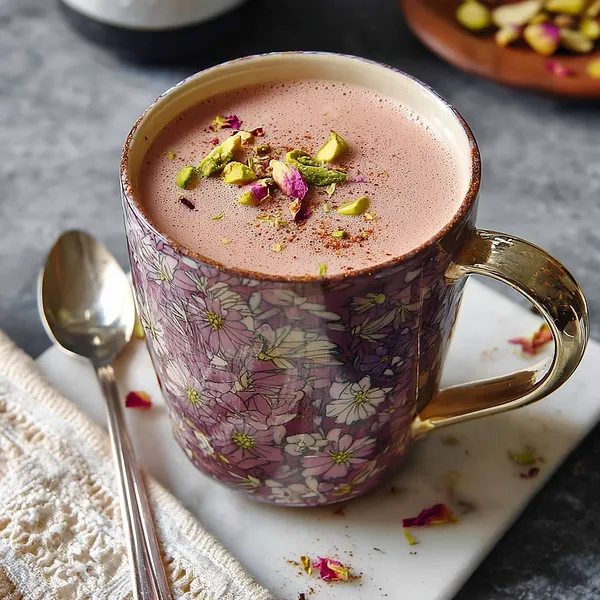
- Pour your masterpiece into your favorite mugs or traditional cups while it's still piping hot. Now comes the beautiful part – generously sprinkle crushed pistachios and almonds over the top, letting them float on the creamy surface. If you want to make it extra special, add a few dried rose petals for a touch of elegance. Serve immediately and watch your guests' faces light up when they see (and taste) this unique tea. The combination of the salted, creamy tea with the crunchy nuts is absolutely divine.
 pin it
Switch Things Up
I first attempted making Noon Chai on a particularly cold winter morning when I was craving something different from my usual coffee routine. I'll be honest – my first batch turned out more gray than pink because I was impatient with the whisking process! But I learned that the magic happens when you take your time aerating the tea with the baking soda. Now, I make this every weekend, and I've gotten the color down to a perfect rosy blush. I love experimenting with the garnishes too – sometimes I'll add saffron strands for extra luxury, or toast the nuts beforehand for deeper flavor. My favorite part is watching people's faces when they take their first sip and realize it's salted – the surprise quickly turns to delight. I've also started serving it with traditional Kashmiri bread, which makes the whole experience even more authentic.
Perfect Pairings
Kashmiri Pink Tea pairs beautifully with slightly sweet or savory baked goods. Try it with traditional Kashmiri kulcha (a soft, leavened bread), butter cookies, or even shortbread. The salted tea also complements pastries filled with nuts or dried fruits. For a more substantial pairing, serve it alongside samosas or pakoras for a traditional Kashmiri tea-time experience. The tea's creamy richness also makes it perfect with baklava, biscotti, or any almond-based desserts. In Kashmir, it's traditionally enjoyed with noon (salt) bread, but crusty sourdough or naan work wonderfully too.
 pin it
Frequently Asked Questions
- → Why is my Kashmiri tea not turning pink?
The pink color comes from the chemical reaction between the tea tannins and baking soda, activated by vigorous aeration. If your tea isn't pink enough, you likely need to whisk more vigorously and for a longer period when adding the baking soda. Make sure you're using enough baking soda (1/4 to 1/2 teaspoon) and that your tea base is strong enough (deep reddish-brown before adding baking soda). The aeration process of pouring the tea from a height is crucial – don't skip this step.
- → Can I make Kashmiri Pink Tea without dairy milk?
Traditional Noon Chai is made with whole dairy milk for its authentic creamy texture and taste. However, you can experiment with plant-based alternatives like cashew milk or oat milk, which have creamier textures than almond or soy milk. Keep in mind that the flavor and color may be slightly different, and the tea may not be as rich. Coconut milk can work but will add a distinct coconut flavor that isn't traditional.
- → Is Kashmiri Pink Tea supposed to be sweet or salty?
Authentic Kashmiri Noon Chai is traditionally salted, not sweetened. The salt enhances the flavors and creates a unique, savory tea experience that's completely different from sweet chai. This is what makes it so special and distinctive. While some modern variations include a tiny bit of sugar, traditional Kashmiri households would never add sugar to Noon Chai. The saltiness is balanced by the creamy milk and aromatic cardamom.
- → Can I prepare Kashmiri Pink Tea in advance?
You can prepare the tea concentrate (the steeped tea before adding milk) in advance and store it in the refrigerator for up to 3 days. When ready to serve, simply reheat the concentrate, add fresh milk, and garnish. However, the vibrant pink color is best when the tea is freshly made and may fade slightly over time. For the best experience and color, it's recommended to make the complete tea fresh each time, though the prep work can be done ahead.
- → What type of tea leaves should I use for authentic results?
Authentic Kashmiri Noon Chai is traditionally made with Kashmiri green tea leaves, which can be found in South Asian grocery stores or online. If you can't find Kashmiri tea, Chinese gunpowder green tea is the best substitute as it has similar properties and will produce good results. Avoid using regular green tea bags or Japanese green tea varieties, as they won't give you the proper color or flavor. The tea needs to be strong and high in tannins to react properly with the baking soda.
- → How do I know when I've aerated the tea enough?
You'll know you've aerated sufficiently when the tea transforms from a deep brown to a distinctly pink or salmon color, and develops a light frothy texture on top. This usually takes 3-5 minutes of vigorous whisking and pouring. The tea should look noticeably lighter and pinker after adding the baking soda and aerating. If it's still brownish, keep aerating. The froth that develops is also a good indicator – you want a nice foamy layer on top, similar to a latte.
Conclusion
Kashmiri Pink Tea is more than just a beverage – it's a cultural experience in a cup. The unique combination of salt, spices, and the signature pink color makes this tea unlike anything you've tried before. Whether you're serving it to guests or enjoying a quiet moment alone, this tea brings warmth and comfort. The creamy texture and nutty garnish make each sip feel indulgent. Once you master this recipe, it'll become your go-to for impressing friends and treating yourself to something truly special.