
 pin it
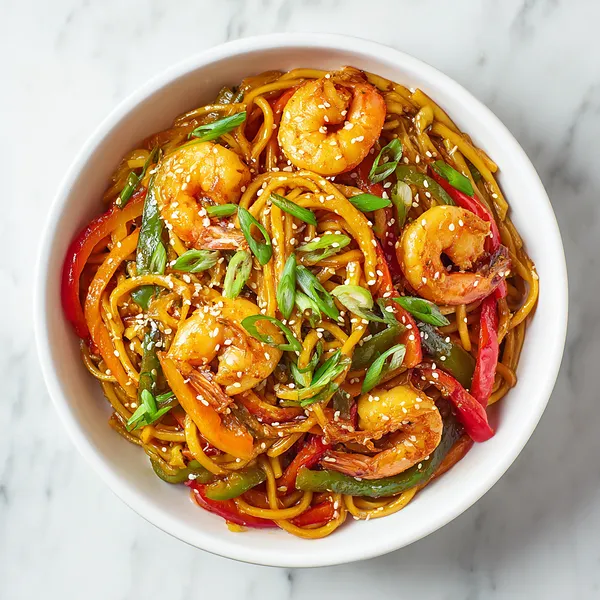
I discovered authentic lo mein on a trip to San Francisco's Chinatown about five years ago. I'd eaten "lo mein" from American Chinese takeout places my whole life, but this was different – the noodles were silkier, the sauce more balanced, less gloopy. I watched the chef work his wok with lightning speed, tossing ingredients with precision and confidence. That experience stayed with me, and when I got home, I became obsessed with recreating it. This recipe is the result of countless experiments, YouTube videos, and yes, a few failed attempts. The breakthrough came when I learned to cook the shrimp separately and not overcrowd the wok – game changer. What I love most is how this dish celebrates each ingredient. The shrimp stay tender and sweet, the vegetables maintain their crunch, and the noodles absorb just enough sauce without becoming soggy. It's a harmony of textures and flavors that represents the best of Chinese stir-fry cooking. Every time I make it, I'm transported back to that little restaurant in Chinatown, watching the master at work.
Why I love this recipe
There's something deeply satisfying about pulling off restaurant-quality Chinese food at home, and this Shrimp Lo Mein delivers every single time. I love that it's genuinely quick – not the fake "quick" where you spend 45 minutes prepping. With a little organization, you can have dinner on the table in 25 minutes flat. But speed isn't the only reason I'm obsessed with this recipe. It's the way the flavors build and layer – the aromatic punch of ginger and garlic hitting the hot oil, the umami depth from soy and oyster sauce, the subtle sweetness that balances it all out. The texture is spot-on too, with those glossy, slippery noodles that are just fun to eat. I also appreciate how clean and light it tastes compared to heavy, greasy takeout. You can actually taste the individual ingredients rather than everything being masked by oil. Plus, there's real joy in customizing it exactly how you like – extra vegetables, more shrimp, spicier sauce. It's become one of those recipes that makes me feel like a competent cook, even on chaotic weeknights when I barely have the energy to stand.
What You Need From Your Kitchen
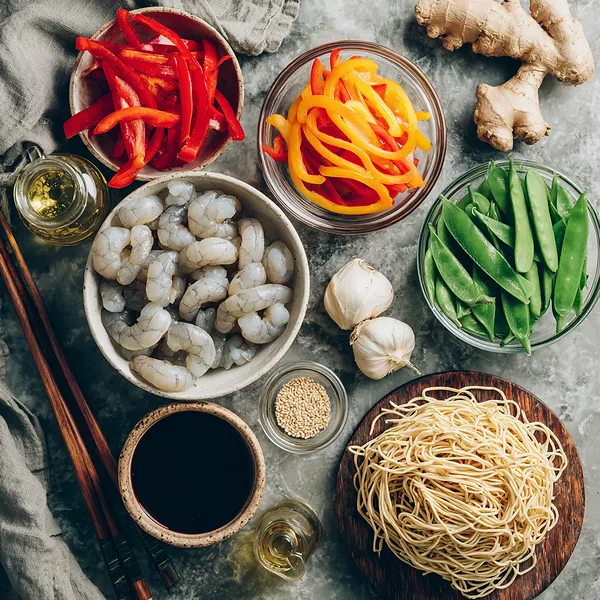
- Lo Mein Noodles: Cook according to package directions and rinse with cold water to prevent sticking
- Large Shrimp: Peel, devein, and pat dry before cooking for best searing
- Bell Peppers: Slice thinly for quick, even cooking and vibrant color
- Snap Peas: Trim ends and leave whole or cut in half diagonally
- Fresh Ginger: Peel and grate finely for maximum aromatic flavor
- Garlic: Mince finely and add to hot oil for fragrant base
- Oyster Sauce: Provides umami depth and slight sweetness to the sauce
Let's Make These Together
- Prepare Your Mise en Place
- Before you even think about turning on the stove, get everything ready. Cook your noodles and have them drained and tossed with a bit of oil. Prep your shrimp so they're dry and ready to hit the hot wok. Slice all your vegetables uniformly so they cook evenly. Mix your sauce in a small bowl. This French cooking term "mise en place" (everything in its place) is crucial for stir-frying because once you start, there's no time to stop and chop. Trust me, this preparation step makes all the difference between a stressed-out cooking experience and a smooth, enjoyable one.
- Master the Wok Temperature
- The secret to restaurant-quality stir-fry is high heat. Your wok or skillet needs to be screaming hot before anything goes in. When you add the oil, it should shimmer and almost smoke. This high heat is what gives your shrimp that beautiful sear and keeps your vegetables crisp rather than steamed. Don't crowd the pan – cook the shrimp in a single layer so they sear instead of steam. If your pan isn't hot enough, everything will release moisture and you'll end up with soggy, sad lo mein instead of the glossy, delicious noodles you're after.
- The Art of the Toss
- When it comes time to combine everything, channel your inner hibachi chef. Use a confident tossing motion to ensure every noodle strand gets coated with sauce. This isn't the time to be timid – really get in there and toss everything together. The motion should come from your wrist, lifting and turning the ingredients so they mix thoroughly without breaking apart. This technique not only distributes the sauce evenly but also prevents the noodles from clumping. It might feel awkward at first, but after a few attempts, you'll find your rhythm and feel like a professional.
 pin it
Switch Things Up
The first time I attempted lo mein at home, I was intimidated by the idea of recreating that perfect takeout texture. I remember standing in my kitchen with all my ingredients lined up, convinced I'd somehow mess it up. But the moment those noodles hit the hot wok with that aromatic garlic and ginger, something magical happened. The kitchen filled with that unmistakable aroma of Chinese restaurants, and I knew I was onto something. I'll never forget the look on my partner's face when they took that first bite – pure surprise that I'd actually pulled it off. Now it's become our Friday night tradition. I've tweaked the sauce ratio about a dozen times until it was just right, and honestly, we both agree it's better than our old takeout spot. The shrimp always come out perfectly tender, and those vegetables stay crisp and vibrant. What started as a kitchen experiment has become one of my most requested dishes.
Perfect Pairings
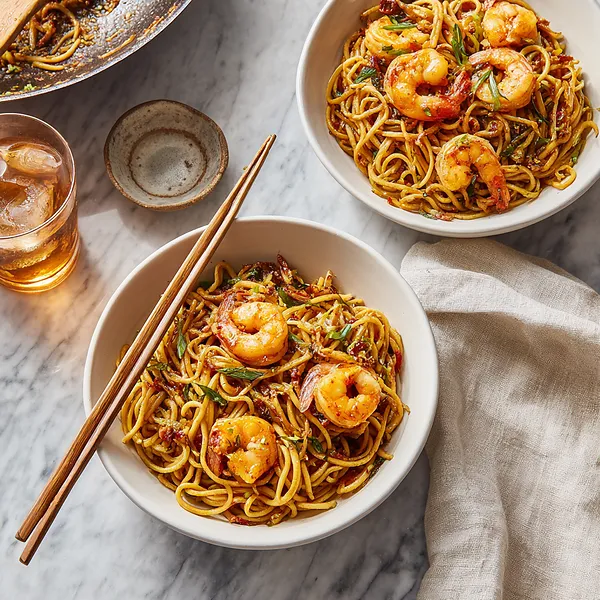
This Shrimp Lo Mein is incredibly versatile when it comes to pairings. Start your meal with some crispy vegetable spring rolls or wonton soup for a complete Chinese restaurant experience at home. If you want to make it a feast, serve alongside General Tso's chicken or beef and broccoli. For a lighter accompaniment, a simple cucumber salad with rice vinegar and sesame oil cuts through the richness beautifully. Don't forget a pot of jasmine tea or, if you're feeling indulgent, a cold Tsingtao beer. For dessert, keep it simple with fortune cookies or fresh orange slices.
 pin it
Frequently Asked Questions
- → Can I use a different type of noodle?
Absolutely! While lo mein noodles are traditional, you can substitute with yakisoba noodles, udon, spaghetti, or even rice noodles. Just adjust the cooking time according to the package directions. The texture will be slightly different, but it will still be delicious.
- → Can I make this dish ahead of time?
Lo mein is best enjoyed fresh, but you can prep all the ingredients in advance. Chop your vegetables, devein the shrimp, and mix the sauce the night before. Store everything separately in the fridge. When you're ready to cook, it'll come together in just 10 minutes. Reheated lo mein tends to be a bit softer, but it's still tasty.
- → How do I prevent my noodles from sticking together?
After cooking, rinse the noodles under cold water to remove excess starch, then toss them with a small amount of sesame or vegetable oil. This coating prevents them from clumping. Also, make sure your wok is hot and keep the noodles moving when you add them – constant motion prevents sticking.
- → What can I substitute for oyster sauce?
If you can't find oyster sauce or want a vegetarian option, try hoisin sauce mixed with a bit of soy sauce. You could also use a combination of soy sauce, a pinch of sugar, and a dash of Worcestershire sauce. Mushroom-based vegetarian oyster sauce is another great alternative that's widely available at Asian grocery stores.
- → Can I add other proteins or vegetables?
Definitely! This recipe is incredibly versatile. Swap shrimp for chicken, beef, pork, or tofu. Great vegetable additions include mushrooms, baby corn, water chestnuts, bok choy, carrots, or broccoli. Just keep in mind that denser vegetables like broccoli or carrots may need a bit longer cooking time or a quick blanch before stir-frying.
- → Why is my lo mein watery or soggy?
This usually happens when the wok isn't hot enough or the ingredients release too much moisture. Make sure your wok is properly preheated, don't overcrowd it, and pat your shrimp and vegetables dry before cooking. Also, drain your cooked noodles very well. If your lo mein seems too wet, cook it for an extra minute or two over high heat to evaporate excess liquid.
Conclusion
This Shrimp Lo Mein has become my go-to answer when the takeout craving hits but I want something fresher and healthier. The beauty of this dish lies in its simplicity and speed – in less time than it takes for delivery to arrive, you've got a restaurant-quality meal on your table. The key is having everything prepped and ready before you start cooking, because once that wok gets hot, it all comes together in minutes. I love how customizable this recipe is too; swap the shrimp for chicken, add more vegetables, adjust the sauce to your taste. It's a formula for success that you'll make again and again.