
 pin it
I first encountered real tonkotsu ramen during a trip to Fukuoka, Japan, where this style originated. I wandered into a tiny ramen shop with only eight seats, and the chef was stirring a massive pot of bubbling white broth that had been cooking for who knows how long. When that bowl arrived, I understood immediately why people line up for hours. The broth was unlike anything I'd tasted—creamy, porky, with incredible depth. The noodles had the perfect chew, and those chashu slices practically melted on my tongue. I spent the rest of that trip trying different ramen shops, but that first bowl stayed with me. Back home, I became obsessed with recreating it. After many attempts and tweaks, I finally developed this recipe that captures that same soul-warming quality. The key is patience—letting those pork bones simmer for hours until the collagen breaks down and creates that signature milky texture. It's not quick, but it's absolutely worth every minute. When I serve this to friends, I love watching their faces light up with that first taste. This recipe brings a piece of Japan into your kitchen.
Why I love this recipe
What I love most about this tonkotsu ramen is how it transforms simple ingredients into something extraordinary through time and technique. There's something almost meditative about the long, slow simmer—it forces you to slow down and be patient, which we don't do enough these days. The aroma that fills your home while the broth cooks is absolutely intoxicating. I also appreciate how customizable this recipe is once you master the base. You can adjust the toppings, play with the richness of the broth, add spicy oil, or experiment with different noodle types. It's a recipe that you can make your own while still honoring the traditional technique. Plus, there's genuine pride in serving a bowl of ramen that tastes better than most restaurants. The look on someone's face when they realize you made this from scratch is priceless. Beyond the taste, making tonkotsu ramen connects me to Japanese culinary tradition and reminds me of that incredible trip. Every bowl is like a delicious memory.
What You Need From Your Kitchen
- Pork bones: Blanch first, then simmer for 12 hours to create the signature creamy broth
- Pork belly: Roll tightly, tie with twine, and braise in soy-mirin mixture for tender chashu
- Fresh ramen noodles: Cook according to package directions until al dente, usually 2-3 minutes
- Eggs: Boil for 6.5 minutes then shock in ice bath for perfect jammy yolks
- Garlic and ginger: Smash and slice, then add to broth for aromatic depth
- Nori sheets: Keep dry and add just before serving to maintain crispness
- Scallions: Slice thinly on a bias for garnish
- Bamboo shoots: Drain and slice, warm in broth before serving
Let's Make These Together
- Blanch the Bones
- Start by placing your pork bones in a large stockpot and covering them completely with cold water. Bring this to a vigorous boil and let it bubble away for about 10 minutes. You'll notice foam and impurities rising to the surface—this is exactly what we want to remove. Drain everything in a colander and thoroughly rinse each bone under cold running water, scrubbing away any remaining bits. This blanching process is your secret weapon for a clean-tasting, non-murky broth that showcases the pure pork flavor without any off-putting bitterness.
- Create the Tonkotsu Magic
- Return those squeaky-clean bones to your pot and cover them with fresh water, making sure the water level sits about 2 inches above the bones. Toss in your smashed garlic cloves and sliced ginger for aromatic depth. Here's where patience becomes your best friend: crank the heat to high and bring everything to a rolling, bubbling boil. Keep it at this aggressive boil for a full 12 hours, checking every hour or so to add more hot water as needed. That rolling boil is non-negotiable—it's what breaks down the collagen and emulsifies the fat into that signature creamy, milky-white broth that makes tonkotsu so special.
- Braise the Chashu Pork
- While your broth is working its magic, let's tackle the chashu. Take your pork belly and roll it up tightly like a jelly roll, then secure it with kitchen twine tied at 1-inch intervals all the way down. In a separate pot, combine soy sauce, mirin, sake, and just a splash of water. Bring this braising liquid to a gentle simmer, nestle your pork roll in there, and let it braise low and slow for about 2 hours. Turn it occasionally so it caramelizes evenly. The pork should become fork-tender and beautifully glazed. Let it cool right in that liquid—it'll soak up even more flavor. Once cooled, slice it into thin rounds that will melt in your mouth.
- Prep Your Toppings
- The toppings might seem simple, but they each play a crucial role in the final bowl. For those iconic soft-boiled eggs with the jammy, golden yolks, timing is everything. Boil water, gently lower in your eggs, and set a timer for exactly 6 minutes and 30 seconds. The moment that timer goes off, plunge them into an ice bath to stop the cooking. Once chilled, peel carefully and slice in half to reveal those gorgeous runny centers. Slice your scallions nice and thin on a bias, prep your bamboo shoots, and have everything arranged and ready to go—assembly needs to happen fast while everything's hot.
- Bring It All Together
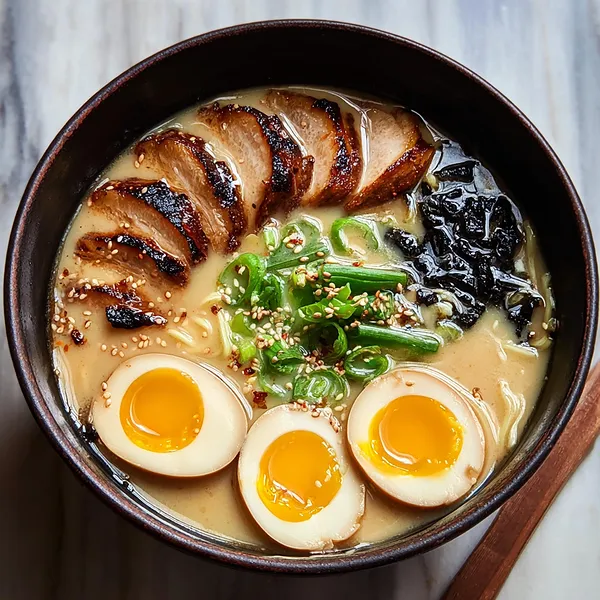
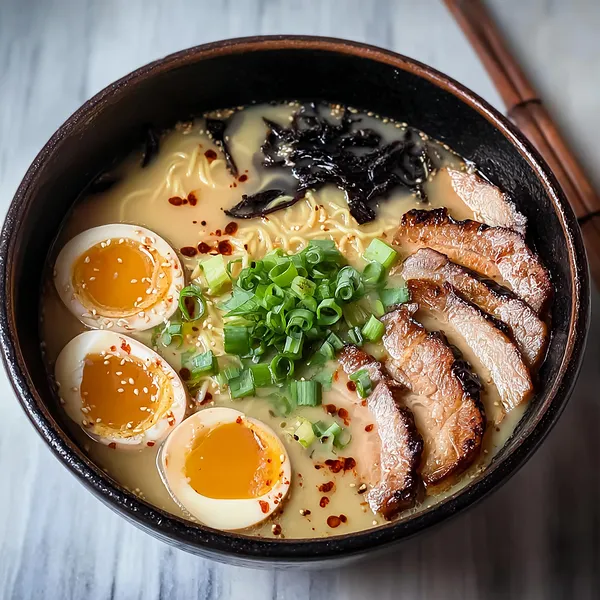
- When you're ready to eat (and trust me, you'll be ready after smelling that broth all day), strain your broth through a fine mesh strainer to remove the bones and aromatics. Taste it and season with salt and white pepper until it's just right. Cook your fresh ramen noodles in a separate pot of boiling water—they usually only need 2-3 minutes. Drain them well and divide them among your serving bowls. Ladle that glorious, steaming tonkotsu broth over the noodles, then arrange your beautiful toppings: fanned-out chashu slices, halved eggs with yolks facing up, nori sheets, bamboo shoots, and a generous sprinkle of scallions. Finish with a drizzle of sesame oil and a dash of white pepper. Serve immediately and prepare for everyone to be speechless after that first slurp.
 pin it
Switch Things Up
I'll never forget the first time I attempted tonkotsu ramen at home—I was terrified I'd mess it up after watching countless YouTube videos. My kitchen smelled like a ramen shop for hours, and I kept checking on that pot of bones like it was a newborn baby. When I finally assembled the bowls and took that first bite, I literally closed my eyes and smiled. The broth was creamy and rich, exactly what I'd hoped for. My partner walked in, took one slurp, and immediately asked when I was making it again. Now I make a huge batch of broth and freeze portions so I can have restaurant-quality ramen whenever the craving hits. Pro tip: don't skip the step of blanching the bones first—it makes such a difference in clarity and flavor. Also, I learned that keeping the broth at a rolling boil is what creates that milky emulsion. The chashu pork is easier than it looks; just roll, tie, and let the oven do the work.
Perfect Pairings
Tonkotsu ramen pairs beautifully with Japanese gyoza on the side—the crispy dumplings complement the rich broth perfectly. A simple cucumber salad with rice vinegar dressing provides a refreshing contrast to the heavy, creamy soup. For drinks, consider a cold Japanese lager or green tea to cleanse your palate between bites. If you want to make it a full spread, add some edamame with sea salt as an appetizer. The spicy kick of kimchi also works surprisingly well as a side dish, adding tang and heat that cuts through the richness of the pork broth.
 pin it
Frequently Asked Questions
- → Can I make the broth ahead of time?
Absolutely! In fact, tonkotsu broth freezes beautifully and can be stored for up to 3 months. Make a large batch, portion it into containers, and freeze. When you're ready for ramen, just thaw and reheat. The flavors actually develop even more after a day or two in the fridge. This makes weeknight ramen totally doable—all you need to do is cook noodles and prep toppings.
- → Why does my broth need to boil for so long?
The extended boiling time is what creates that signature creamy, milky-white tonkotsu broth. During the 12-hour rolling boil, the collagen in the bones breaks down and emulsifies with the fat, creating that rich, creamy texture. A gentle simmer won't achieve the same result—you need that aggressive boil to properly emulsify everything. Think of it as making a natural, bone-based cream sauce.
- → Can I use a slow cooker instead?
While a slow cooker is convenient, it won't produce authentic tonkotsu broth because it can't maintain the rolling boil necessary for emulsification. Slow cookers simmer gently, which will give you a clear broth similar to other ramen styles, but not the creamy, opaque tonkotsu broth. If time is an issue, consider using a pressure cooker on high pressure for 2-3 hours, though the texture will be slightly different.
- → What if I can't find pork bones?
Check with your local butcher or Asian grocery store—they often have pork bones available, sometimes even pre-cut for ramen. You can also ask at regular grocery store meat counters; they may have them in back or can order them for you. In a pinch, you can use a combination of pork neck bones, trotters, or even chicken bones mixed with pork, though the flavor will be different from traditional tonkotsu.
- → How can I tell when my eggs are perfectly cooked?
The key is precise timing and immediate cooling. Boil for exactly 6 minutes and 30 seconds for that perfect jammy yolk—any longer and they'll be too firm, any shorter and they'll be too runny. The ice bath is crucial because it stops the cooking process instantly. If your eggs are hard to peel, try using eggs that are at least a week old rather than super fresh ones, and add a splash of vinegar to the boiling water.
- → Can I make this recipe vegetarian or vegan?
While traditional tonkotsu is pork-based, you can create a similar creamy broth using mushrooms, nuts, and miso. Simmer shiitake mushrooms, kombu seaweed, and cashews for several hours, then blend until creamy. Use miso paste for umami depth. Replace the chashu with marinated tofu or mushrooms, and skip the egg or use a plant-based alternative. It won't be authentic tonkotsu, but it can be delicious in its own right.
Conclusion
Tonkotsu ramen is more than just a meal—it's a labor of love that rewards patience with incredible depth of flavor. The slow-simmered pork bone broth creates that signature creamy, milky texture that makes this ramen so special. While the cooking time is lengthy, most of it is hands-off simmering, and the result is a restaurant-quality bowl you can be proud of. The combination of rich broth, tender chashu, perfectly cooked eggs, and springy noodles creates a harmony of textures and flavors. This recipe is perfect for a weekend project when you want to create something truly special.