
 pin it
I first encountered real Bulgogi at a Korean BBQ restaurant where the smoke and sizzle from the tabletop grills was absolutely intoxicating. The thin slices of beef would hit the grill and caramelize almost instantly, filling the air with this incredible sweet-savory-smoky scent that I still think about. I was completely hooked from the very first bite — tender, juicy, with this deep umami richness balanced by sweetness and just a whisper of heat. When I got home I started obsessing over recreating it in my own kitchen. The key I discovered was the pear in the marinade — it tenderizes the meat enzymatically and adds a subtle fruity sweetness that rounds everything out. Over time I refined the ratios until I landed on this version, which I genuinely believe captures everything that made me fall in love with it that first night. Now it's one of the dishes I'm most proud to serve to anyone who hasn't tried Korean food before, because the reaction is always the same — complete, total amazement.
Why I love this recipe
I love this recipe because it delivers the kind of deep, complex flavor that feels like it took hours, but it genuinely comes together in under 40 minutes. The marinade is the magic — every ingredient has a job, from the soy sauce building umami, to the pear tenderizing the beef, to the sesame oil adding that unmistakable nutty warmth. I love how the beef caramelizes at the edges when it hits a screaming hot pan, creating these gorgeous dark, lacquered bits that are the best part of the whole dish. I love that it's endlessly adaptable — different proteins, different greens, different heat levels — but the soul of the recipe stays the same. Most of all I love what it does to people who try it for the first time. There's always this moment of silence right after the first bite, followed by an immediate request for the recipe. That reaction never gets old.
What You Need From Your Kitchen
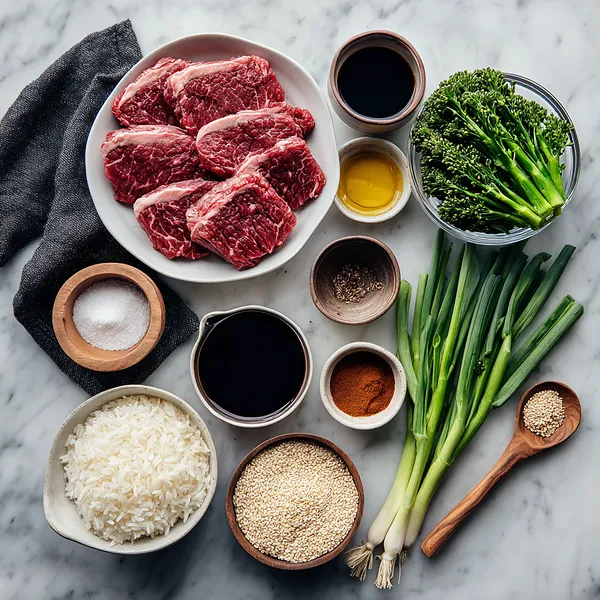
- Ribeye or Sirloin Beef: Thinly sliced against the grain and marinated until deeply flavored, then seared at high heat for caramelized, lacquered edges.
- Asian Pear: Grated into the marinade to enzymatically tenderize the beef, adding a subtle fruity sweetness that balances the savory elements.
- Soy Sauce: The umami backbone of the marinade, giving the bulgogi its deep, savory depth of flavor.
- Sesame Oil: Adds a signature nutty, toasty aroma to both the marinade and the finished dish.
- Gochugaru: Korean red pepper flakes that introduce a gentle, smoky heat without overpowering the other flavors.
- Green Onions: Used both charred whole as a garnish and sliced fresh to finish the bowl with brightness.
- Broccolini: Quickly sautéed until vibrant and lightly charred, adding freshness and color alongside the rich beef.
Let's Make These Together
- Mix together the bulgogi marinade
- Combine soy sauce, sesame oil, brown sugar, rice wine, grated pear, garlic, ginger, and gochugaru in a large bowl and whisk until the sugar fully dissolves. This marinade smells absolutely incredible before the beef even goes in.
- Marinate the thinly sliced beef
- Add your thinly sliced beef to the marinade, toss to coat every piece thoroughly, then cover and refrigerate for at least 30 minutes. The longer it sits, the more tender and flavorful the meat becomes.
- Prep green onions for charring
- Brush whole green onions lightly with sesame oil and set aside. Slice extra green onions on the diagonal for your garnish — these add a fresh pop of color and flavor to the finished bowl.
- Sear the beef at screaming high heat
- Get your cast iron or wok absolutely ripping hot before adding the beef in a single layer. Cook 1–2 minutes per side without disturbing — you want those gorgeous, caramelized dark edges that make bulgogi so irresistible.
- Char the green onions in the same pan
- After the beef, add whole green onions to the hot pan and cook briefly until charred and wilted. They pick up all the residual flavor from the beef and become perfectly sweet and smoky.
- Sauté the broccolini quickly
- Add broccolini to the pan with a splash of water and sesame oil, toss, and cook for 3–4 minutes until bright, just tender, and lightly charred at the edges. A quick drizzle of soy sauce finishes them perfectly.
- Build your bowl and serve immediately
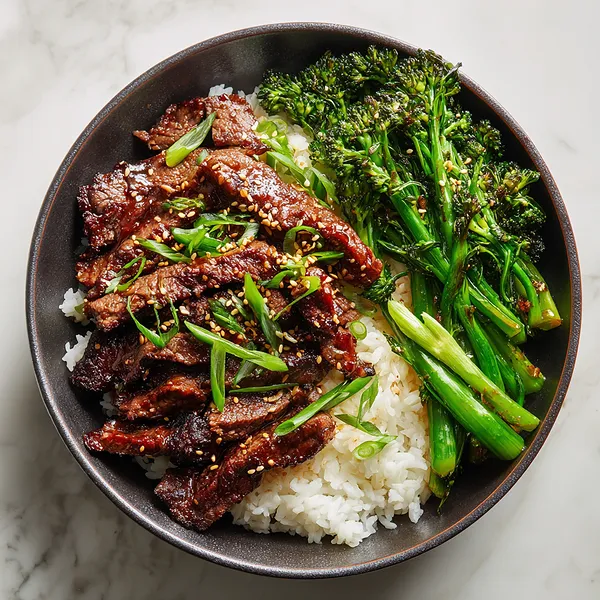
- Spoon rice into dark bowls, layer the caramelized bulgogi over the top, lay charred green onions across, tuck in the broccolini, and finish with sesame seeds and sliced green onions. Serve hot and enjoy every single bite.
 pin it
Switch Things Up
I once had leftover bulgogi marinade with no beef, so I marinated some portobello mushrooms in it instead on a whim. Honestly? Incredible. I still make the original with beef regularly, but now I keep that mushroom version in the rotation for lighter nights. I also started adding a soft-boiled jammy egg to the bowl once, and now I can never go back to serving it without one. Little tweaks like this are what keep a recipe exciting every single time you make it.
Perfect Pairings
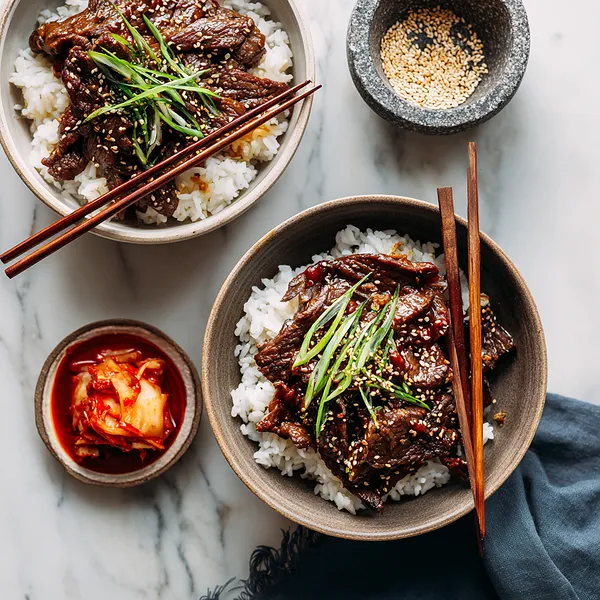
Korean Beef Bulgogi bowls pair beautifully with a side of kimchi — the fermented tang cuts right through the richness of the caramelized beef. A small bowl of doenjang jjigae (Korean soybean paste soup) alongside turns this into a full Korean spread. For a lighter pairing, a simple cucumber namul salad dressed in sesame oil and rice vinegar adds a refreshing crunch. Cold barley tea or a chilled Korean sikhye rice drink completes the experience perfectly.
 pin it
Frequently Asked Questions
- → What cut of beef is best for bulgogi?
Ribeye is the traditional and most flavorful choice due to its fat marbling, which keeps the beef incredibly juicy and tender. Sirloin is a great leaner alternative. The key is slicing the beef as thinly as possible — freezing it for 20–30 minutes beforehand makes this much easier.
- → Can I make this without Asian pear?
Yes! If you can't find Asian pear, a ripe kiwi works as an excellent substitute — it contains similar enzymes that tenderize the meat. A small amount of grated apple also works in a pinch, though the tenderizing effect will be slightly less pronounced.
- → Can I grill this instead of pan-searing?
Absolutely — grilling over very high heat is actually the traditional method and gives the beef incredible smoky flavor. Use a grill grate or grill pan over the highest heat setting, and cook the thin slices quickly so they caramelize without drying out.
- → How long can I marinate the beef?
A minimum of 30 minutes is recommended, but 2–8 hours in the fridge produces the most flavorful and tender results. Avoid marinating for longer than 12 hours, as the enzymes in the pear can begin to break down the meat texture too much.
- → Is this recipe gluten-free?
It can easily be made gluten-free by substituting regular soy sauce with tamari or a certified gluten-free soy sauce. All other ingredients in this recipe are naturally gluten-free.
- → What can I serve alongside bulgogi besides rice?
Bulgogi is incredibly versatile — serve it in lettuce wraps with a smear of ssamjang paste, over glass noodles (japchae style), in steamed bao buns, or even stuffed into tacos with kimchi slaw for a fusion twist.
Conclusion
Korean Beef Bulgogi is one of those recipes that proves the most extraordinary flavors come from the simplest techniques. The marinade does all the heavy lifting, and the sear does the rest. Whether you serve it as a weeknight bowl or a dinner party showstopper, it never fails to impress. Make it once and it earns a permanent place in your recipe rotation.